Hardwood Flooring Buying Guide

For many homeowners, hardwood flooring is a must-have. Nothing matches real wood for beauty, longevity and resale value. Hardwood is versatile, too. A hardwood room can be light or dark, informal or elegant, sophisticated or rustic. This flooring comes from a variety of trees from all over the world and can be cut and finished in a style to suit any home.
If you’re considering hardwood floors, here are some things to think about.
Solid Hardwood vs Engineered Wood
Some might think solid hardwood is the obvious choice as long as you don’t need to save money. That’s not necessarily the case. The best engineered wood matches solid wood in beauty and comes close in durability. In fact, there are some situations where engineered wood may perform better and last longer.
Engineered wood is, after all, real wood. It consists of a veneer of hardwood bonded over a core of high-quality plywood. Consider this point-by-point comparison of the two hardwood options:
Longevity. A solid hardwood floor can last at least 30 years and might go as long as 100. Engineered wood should be good for 20-40 years.
Cost. Solid hardwood is typically more expensive.
Refinishing. Solid hardwood can be sanded and refinished multiple times. Engineered wood can be refinished only once or twice without wearing through the veneer.
Thickness. Solid hardwood is usually thicker, at around 3/4 inch, compared to 3/8 to 3/4 for engineered. Also, solid wood is installed over a layer or two of plywood. For many people this doesn’t matter, but solid wood might raise the floor and shrink the room just a little bit more.
Acoustics. Solid hardwood is quieter. It absorbs sound and reduces echoing.
Comfort. Engineered wood is softer underfoot, especially when it’s installed as a floating floor.
Installation. Installing solid hardwood requires a great deal of skill, while an engineered wood floor, especially the floating variety, is a better candidate for a DIY project.
Resistance to humidity. This is where engineered wood might be the better choice in certain locations. Solid hardwood is subject to warping with extended exposure to dampness. Because of its construction, engineered wood is better able to keep its shape. Also, unlike solid wood, engineered wood can be installed over concrete with proper measures and resist the humidity that migrates through.
Pick a Color
Solid hardwood is available in a wide range of natural colors, and staining only increases the color selection. Engineered wood is usually sold pre-stained and the color selection is a bit smaller, though there are still plenty of choices.
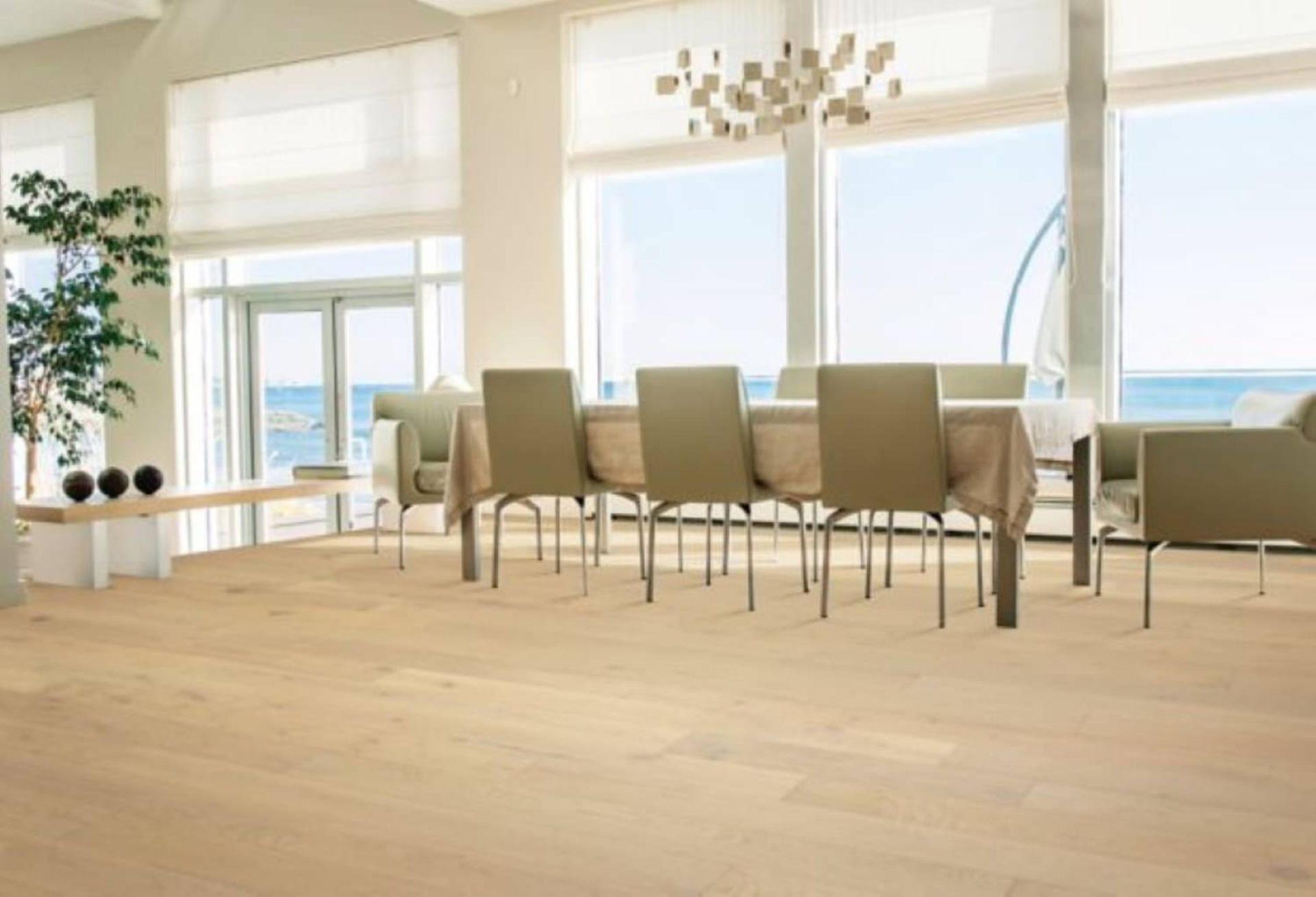
Light colors tend to open up a room and make it feel larger and airier. Light woods are also slower to show the results of foot traffic. While light colors, especially white oak, seem to be everywhere, there’s still plenty of interest in stained dark floors. Darks are not just for traditional formal settings: they can also be used in a modern style, especially with contrasting furnishings.
Light and dark aren’t the only options. Gray floors have been a popular choice for a while, and the trend shows no signs of going away. In addition, reclaimed and distressed woods, with their one-of-a-kind colors and patterns, can be the starting point for designing a room that’s uniquely yours.
Plank Sizes
It used to be that hardwood plank width was pretty standard: two to three inches. That classic look is still available, but more people are following the trend in other flooring types and choosing wider planks. A four to six inch width may be the new standard, and large rooms sometimes feature a plank even wider.
Another point about planking: solid hardwood planks are still generally wedged close together, while engineered wood may have bevels that make the seams stand out.
Choosing the Best Solid Hardwood
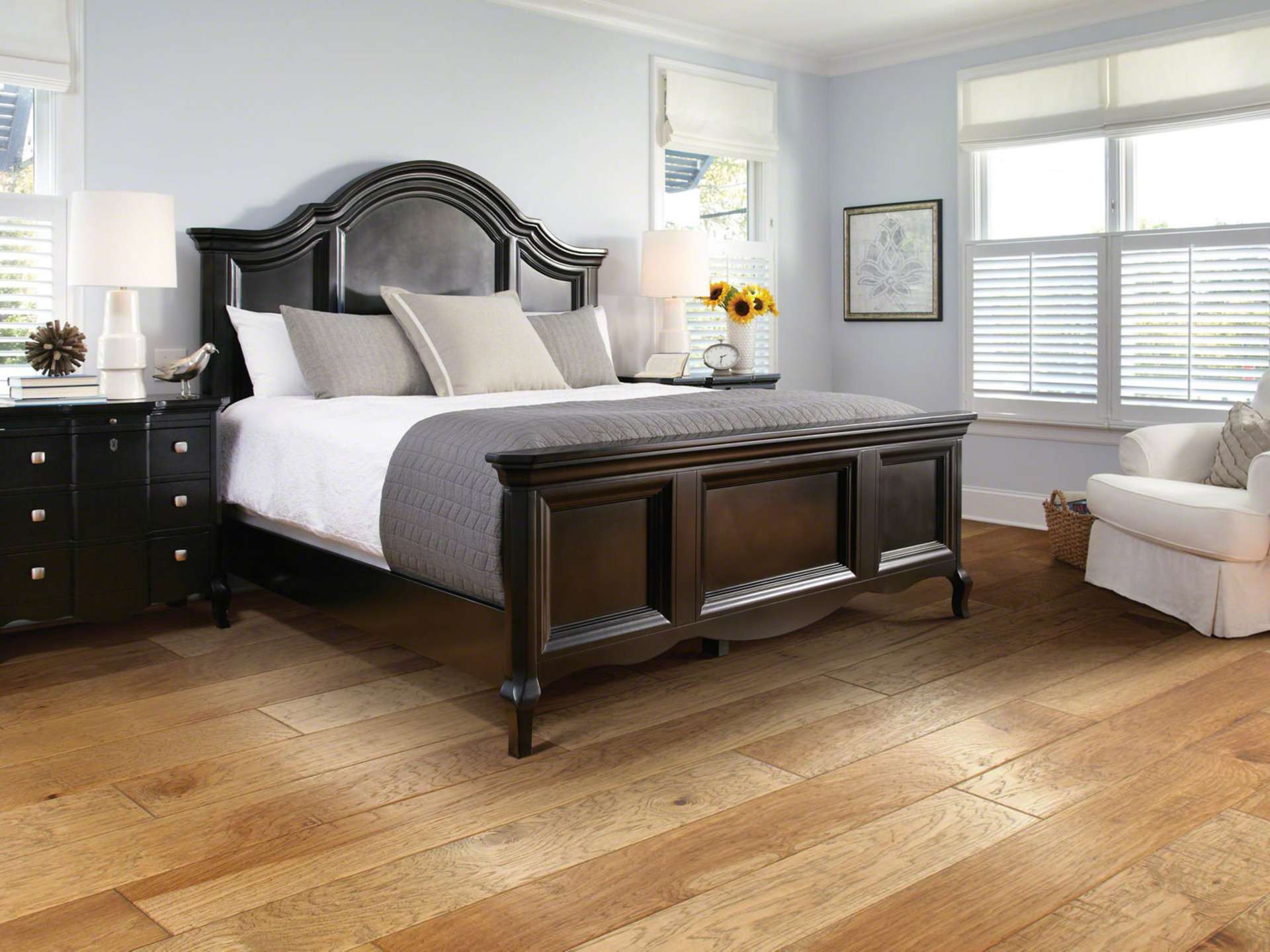
Solid hardwood is, well, solid. It’s milled directly from lumber with tongue and groove interlock, and it’s always nailed to a subfloor. There’s a wide range of tree species and finishes available; you have an array of choices when picking the flooring that’s best for your favorite room.
Finish
You can buy hardwood either “raw” or with the stain already applied. Pre-stained wood makes for an easier installation, but some people prefer the color flexibility that comes with finishing the wood after it’s already in place.
Finishes generally fall into two categories: oil and polyurethane. Oils penetrate the wood, while polyurethane forms a hard protective topcoat. Some polyurethane surfaces are harder than others. Neither oil nor polyurethane is necessarily better, but they do have their differences:
Look and feel. Polyurethane has a more finished look with a sheen and less texture. Oil finish is more matte with a soft and natural look and feel.
Protection. Because it’s a topcoat, polyurethane is more resistant to stains, scratches and general wear and tear. Although oil scratches more easily, scratches are less noticeable.
Maintenance. Scratches in oil-stained hardwood are easier to touch up spot by spot. With polyurethane, you may have to replace a board or buff and restain a section of floor. Oil finish maintenance is more frequent but easier. With polyurethane, the harder the coating, the less frequent the maintenance, but it’s more work when you do have to do it.
Grain Pattern
The grain pattern of solid hardwood boards depends on how the wood is cut. Plain-sawn wood is the standard cut. It produces the familiar curved patterns called “cathedrals.”
However, there are other choices. Rift-sawn boards have a consistent linear grain instead of cathedrals. Quarter-sawn boards resemble rift-sawn but have more irregular figures. Rift-sawn and quarter-sawn are often mixed together to produce a moderate amount of figuring. This unique patterning is often preferred either for a rustic style or an edgier modern one.
Species
Quite a few species are suitable for hardwood flooring. Most people look at color and grain pattern to choose the hardwood that’s most beautiful in their own home.
Oak. Oak is at the top of about any flooring list because it’s durable, attractive and widely available. Oak’s natural grain is a classic flooring look and the wood can easily be stained in multiple shades. Many designers prefer white oak because the red version can have a pinkish tone that’s not for everybody.
Walnut. The rich, chocolaty color is a favorite among homeowners who want a darker floor, however it is softer than other woods and can be more prone to dents and scratches.
Hickory. Hickory puts the “hard” in hardwood. It’s the strongest species commonly used for floors. The grain pattern is sporadic, and the color can vary from board to board, which makes hickory a favorite for those who want a rustic look.
Maple. This wood is an ideal choice for light colored floors. It has a thin grain and tends toward tan and creamy colors.
Birch. This wood is highly durable and stains well. It’s widely used in engineered wood.
Ash. Ash is usually light in color, but it plays well with stain, and it’s easy to make it darker. It’s a leading engineered wood choice because it makes a stiff veneer.
Bamboo. Bamboo is a grass, but as flooring it looks, feels and endures like wood. It can even be refinished like wood. It’s as hard as real wood but more water-resistant. It’s a top sustainable choice because of how quickly it grows.
Choosing the Best Engineered Wood
Engineered wood consists of a solid wood veneer over three to nine layers of plywood. The plywood layers, called the core board, are stacked one on top of the other and glued together. Each layer, or ply, is perpendicular to the one next to it. This provides a stability and stiffness that, in the best engineered wood, exceeds that of solid flooring. The more plies, the greater the stability.
The veneer layer is typically 0.6 to 6 mm thick and can be made of any hardwood species. Oak, walnut, ash, birch and hickory are widely used. Woods that take stain well are preferred, and engineered wood is almost always sold pre-finished. The harder and thicker the veneer, the longer the floor will last. A hard, thick engineered floor veneer can be sanded and refinished once or twice. A veneer thinner than about 2 mm can never be refinished.
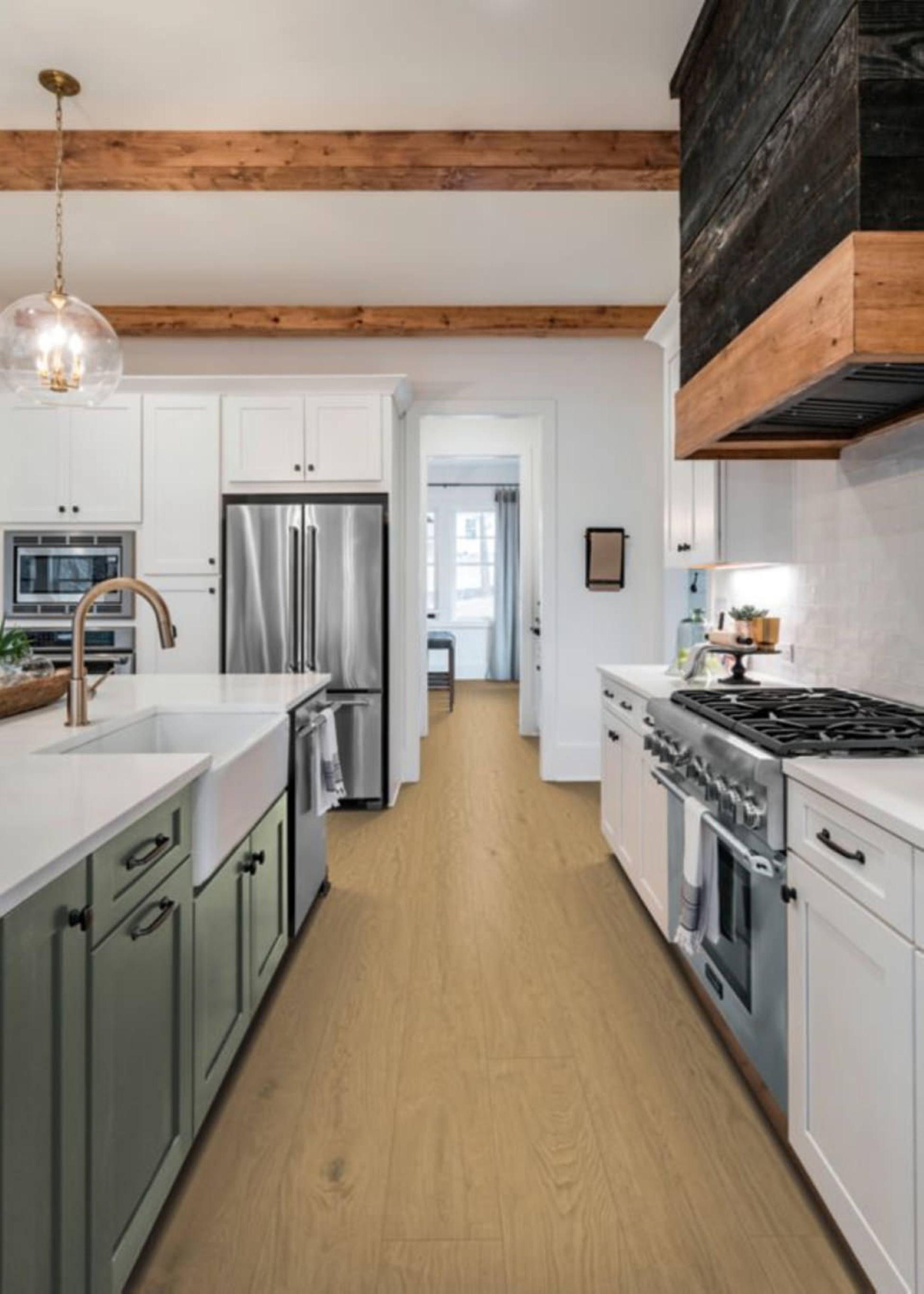
Engineered wood planks tend to be wider than solid wood boards. It’s not uncommon for the planks to have beveled edges that create small grooves between the boards.
Engineered wood flooring can be installed in several ways. When it’s laid over an existing floor, it can be installed as a floating floor: the planks are snapped together and there are no nails or glue to attach them to the old floor. This is the easiest type of hardwood floor to DIY. It provides the most flexible and comfortable walking surface.
The flooring can also be glued directly to a cement floor or atop a soundproofing mat. It can be installed over an in-floor radiant heating system. Additionally, engineered wood can be nailed or stapled to a plywood subfloor.
Solid Hardwood and Engineered Wood: Two Amazing Choices
A hardwood floor gives you long-lasting beauty that enhances your enjoyment of your home and can even increase its resale value. Whether you choose solid hardwood or the engineered alternative, you’re sure to find a color and grain pattern that you’ll be happy with for years to come.