Dining Room Revival
Formal dining rooms are making a comeback--with some contemporary additions.




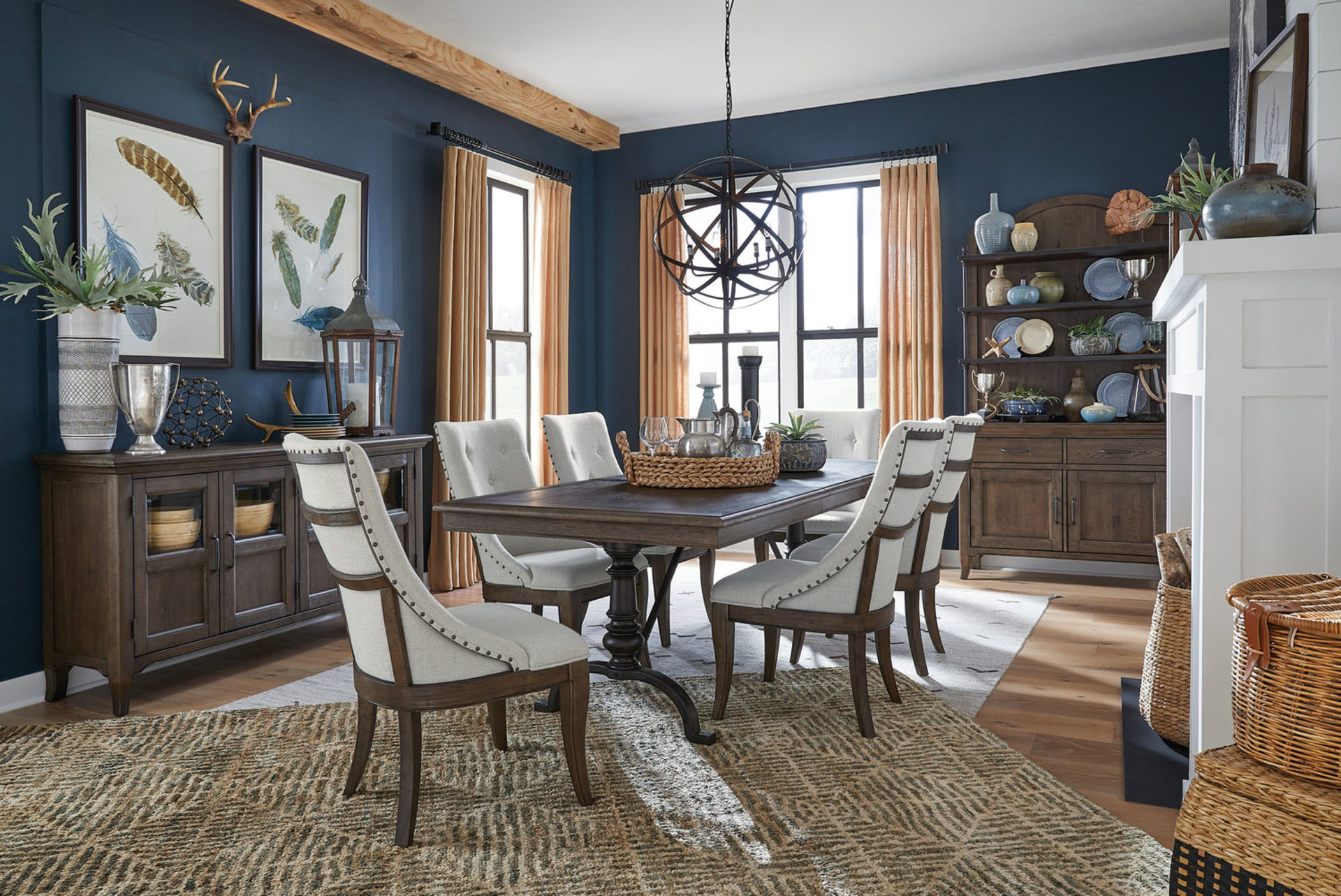
Over the past few years, many families have rediscovered the pleasure of dining together. This can happen at a kitchen table or on a porch, but it’s even better when there’s a space specifically set aside for communal meals. It’s not surprising, then, that the formal dining room is making a comeback!
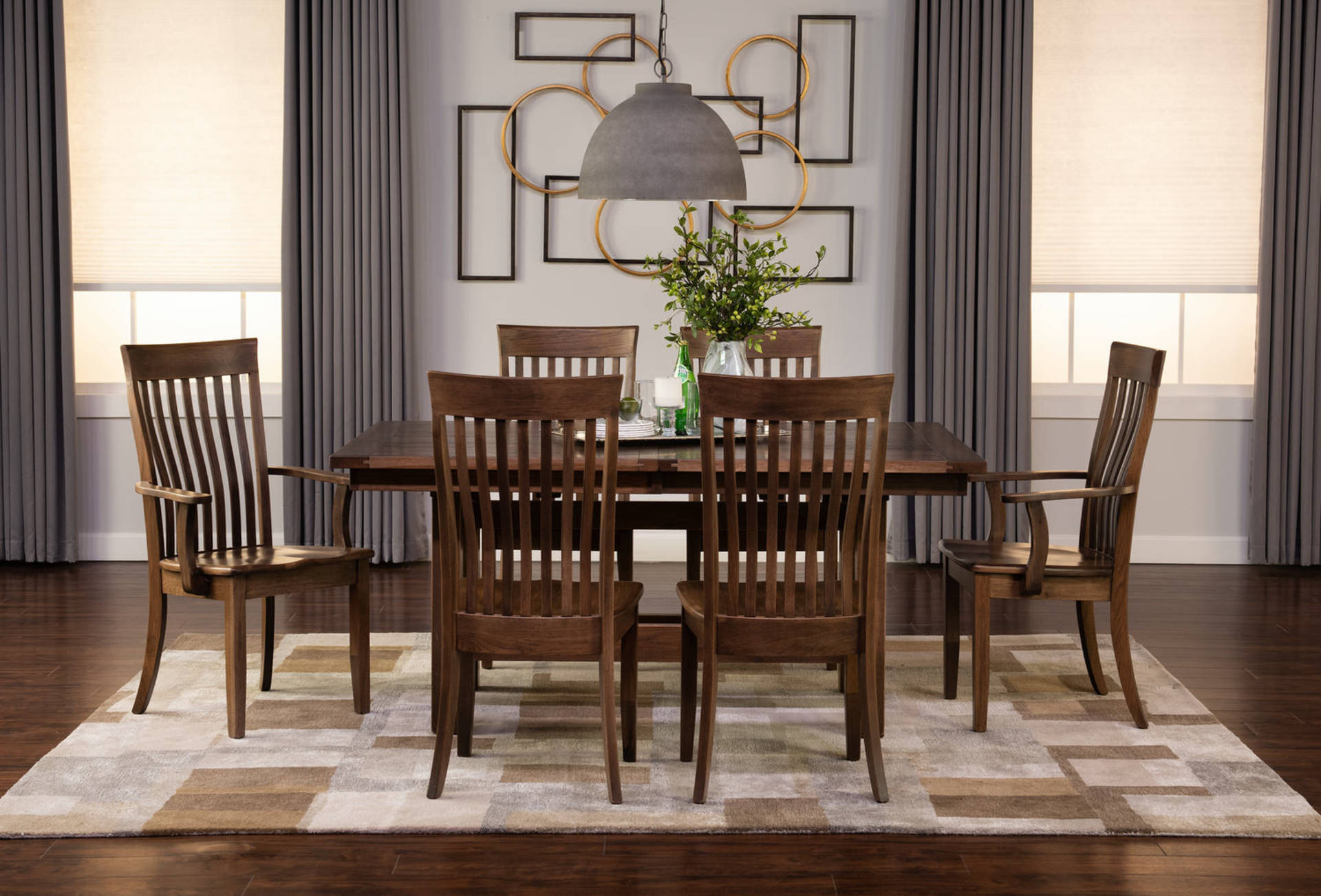
Formal Dining Rooms: Why Now?
At one time the dining room was considered an essential space. Every home had one! Often it was a room that sat unused except on special occasions. Then home builders began creating houses with a large living/dining space. Some people would position a dining set on one half of the room while others used the entire space for other purposes entirely.
As families have rediscovered the joy of breaking bread together, they’ve been looking to make the surroundings as special as the food. One way is by reestablishing the dining room. However, don’t expect today’s dining areas to have the unapproachable stodginess that older ones sometimes displayed! The formal dining room is back, but in a reinvented form.
Today’s dining room is perhaps like the perfect little black dress. It can be as formal or as casual as the occasion requires! Today’s formal dining room is flexible. People need to make the most out of the space in their homes, so the modern dining room isn’t used only at mealtimes. It’s capable of being the home’s new hub, and it can double as a game room, a sitting room or a family room!
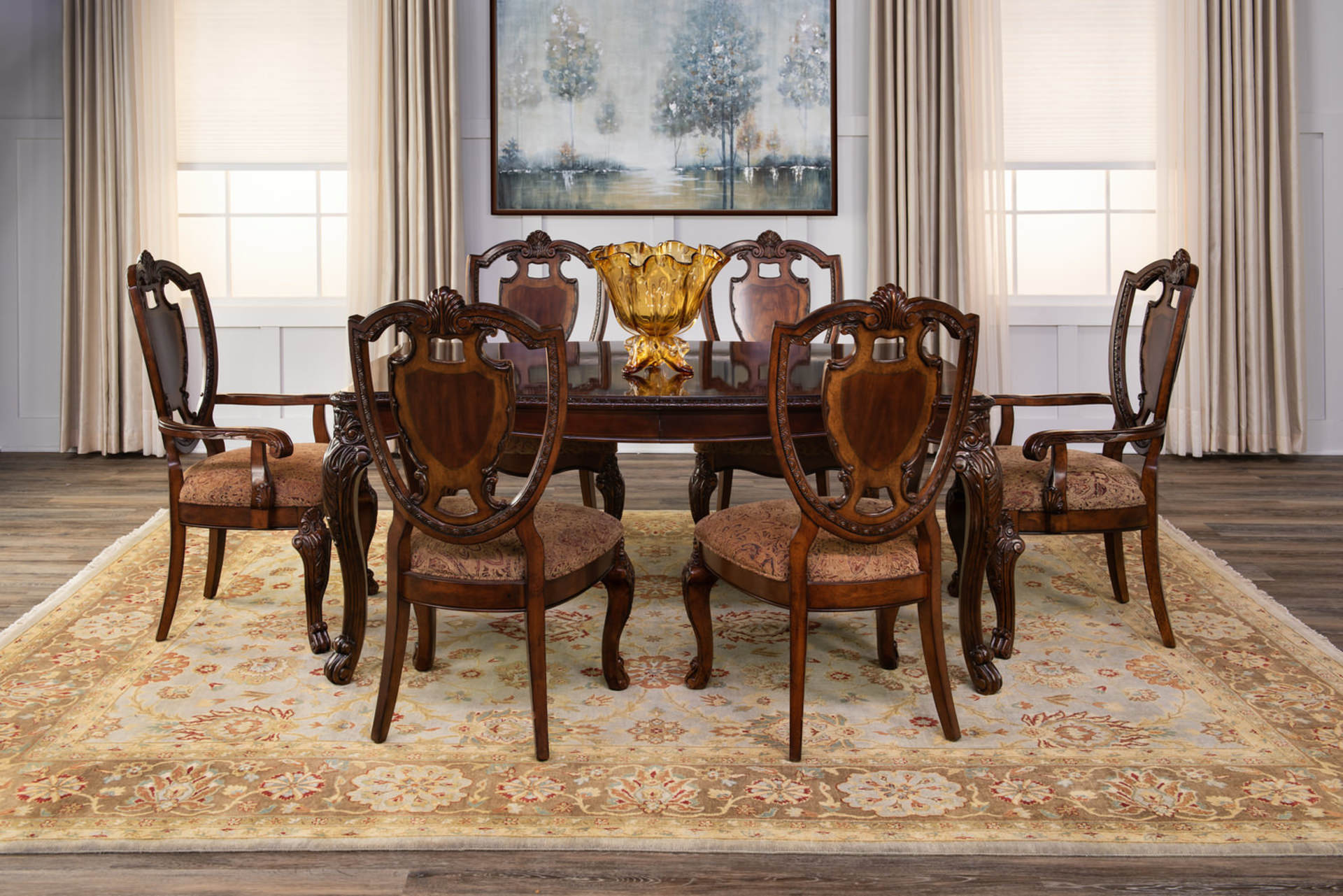
How to Create a Formal Dining Room
A formal dining room is at its best with more than just a dining set. Here are some dining room design guidelines for making it into a more elegant space.
Table and Chairs
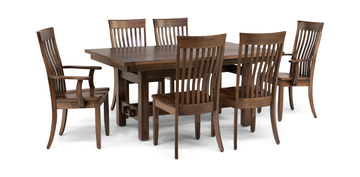
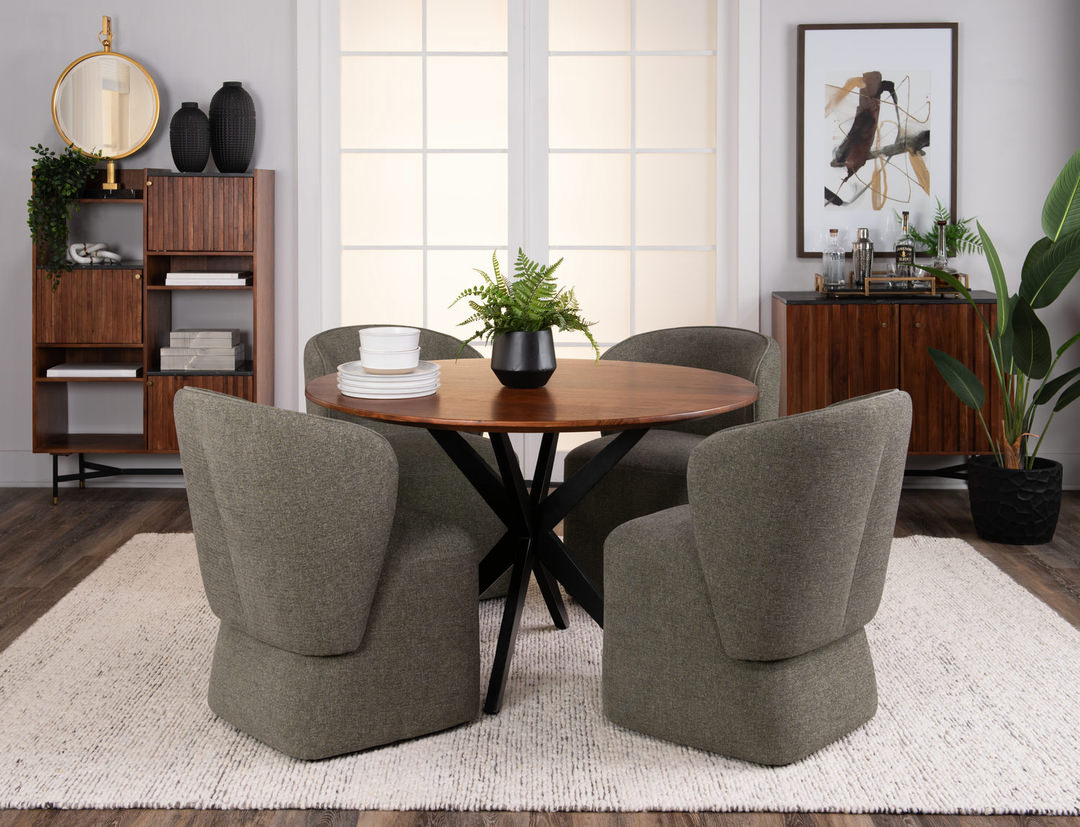
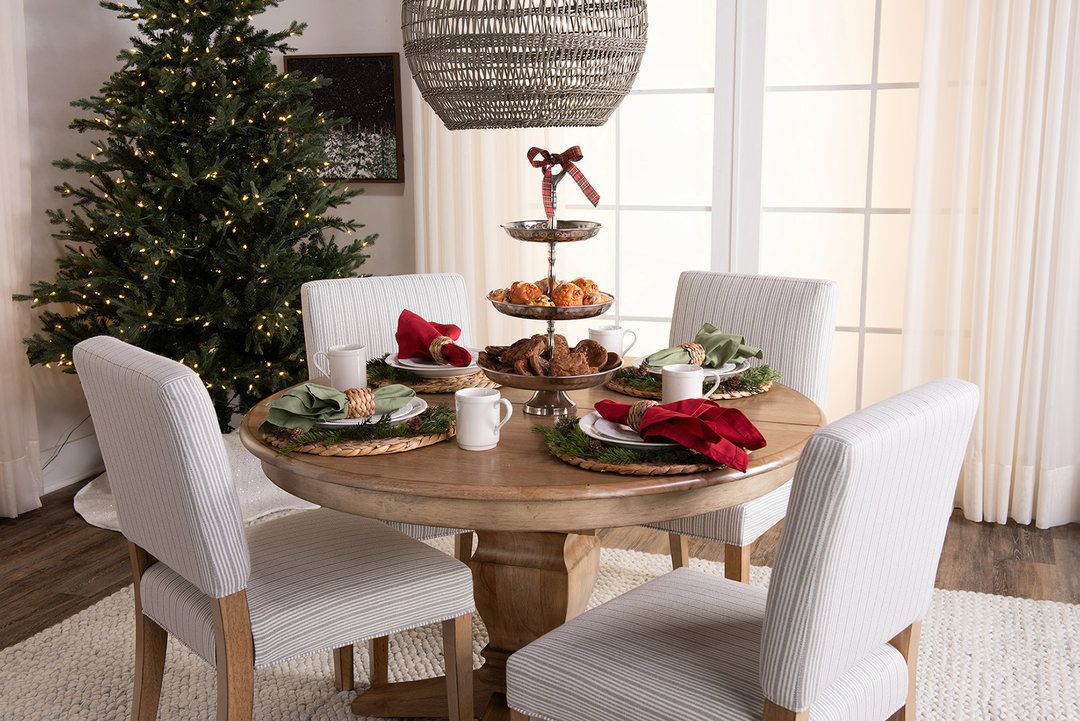
The table, of course, is the centerpiece of any dining room. In general, rectangular tables are more formal than circular ones. However, a round table in a square room will often complement the room’s geometry with a touch of visual appeal that brings people together in conversation.
The extendable table is the staple of many dining spaces, allowing for easy expansion when the need arises.
In any case, the table should be proportional and should not feel as if it takes up the entire room.
Chairs can make the room either more or less formal. Chairs with arms or high backs are associated with the more traditional dining rooms. Some people use chairs with arms at the head and foot and simpler chairs along the sides. Others choose host chairs or upholstered chairs that complement but don’t match the set for a bespoke look. Chairs should always be of a size that neither overshadows the table nor feels small next to it. Arms should be low enough to slide under the tabletop.
The table and chairs are best arranged so there’s at least two feet between the back of a pushed-out chair and the wall. They should be distributed around the table such that each diner has no less than two feet of table space.
If you have the capacity, it’s nice to have a few extra chairs around the perimeter of the room. Some guests will use them for pre-dinner libations or post-meal conversation. They don’t have to exactly match the ones at the table but should coordinate.
The Rug
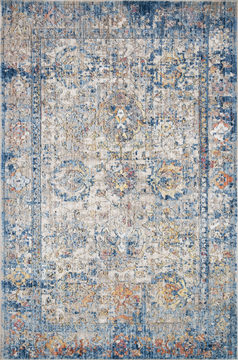
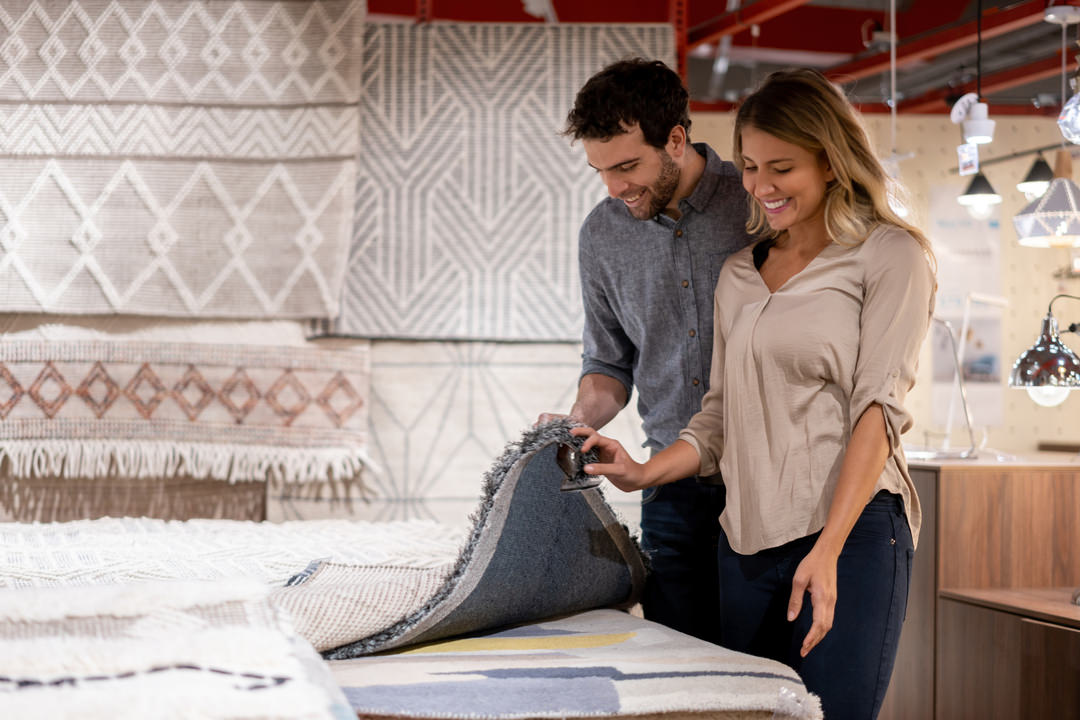
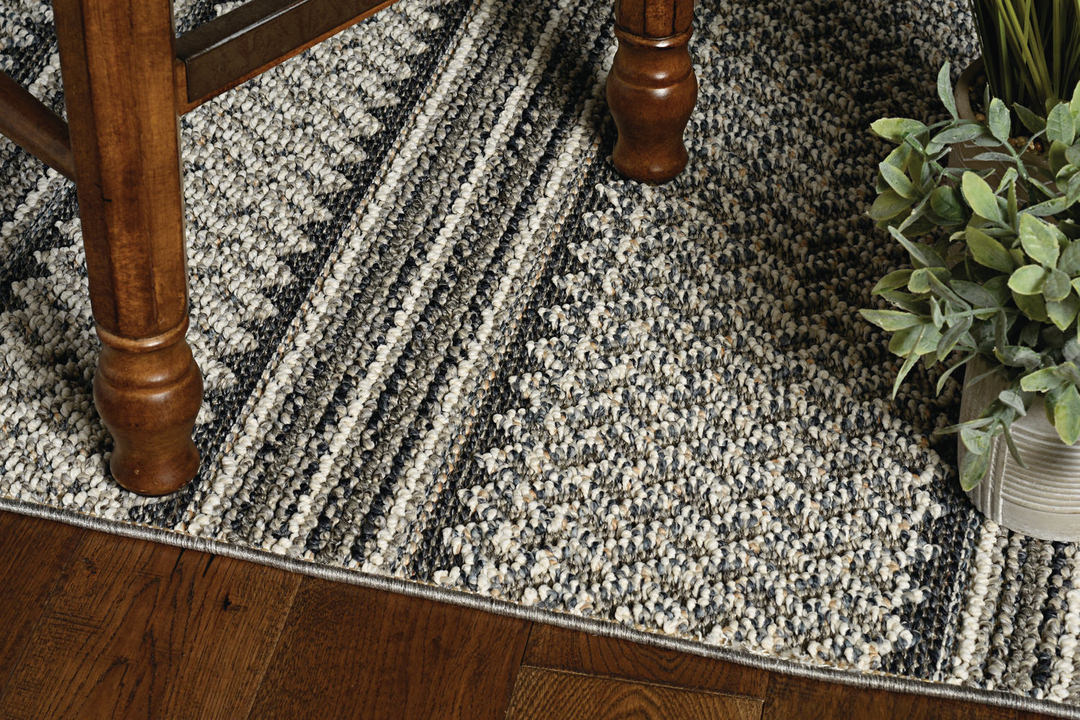
Some dining rooms are carpeted, but the rug is a good option for floors such as hardwood and vinyl. It protects the floor from a sliding chair! Any rug should be large enough for the rear legs to stay on it when the chair slides back. That’s about three feet from the table’s edge.
Rugs should be thin, low-pile and easy to clean.
Auxiliary Pieces
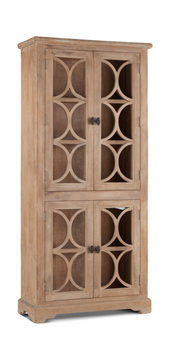
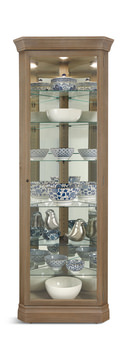
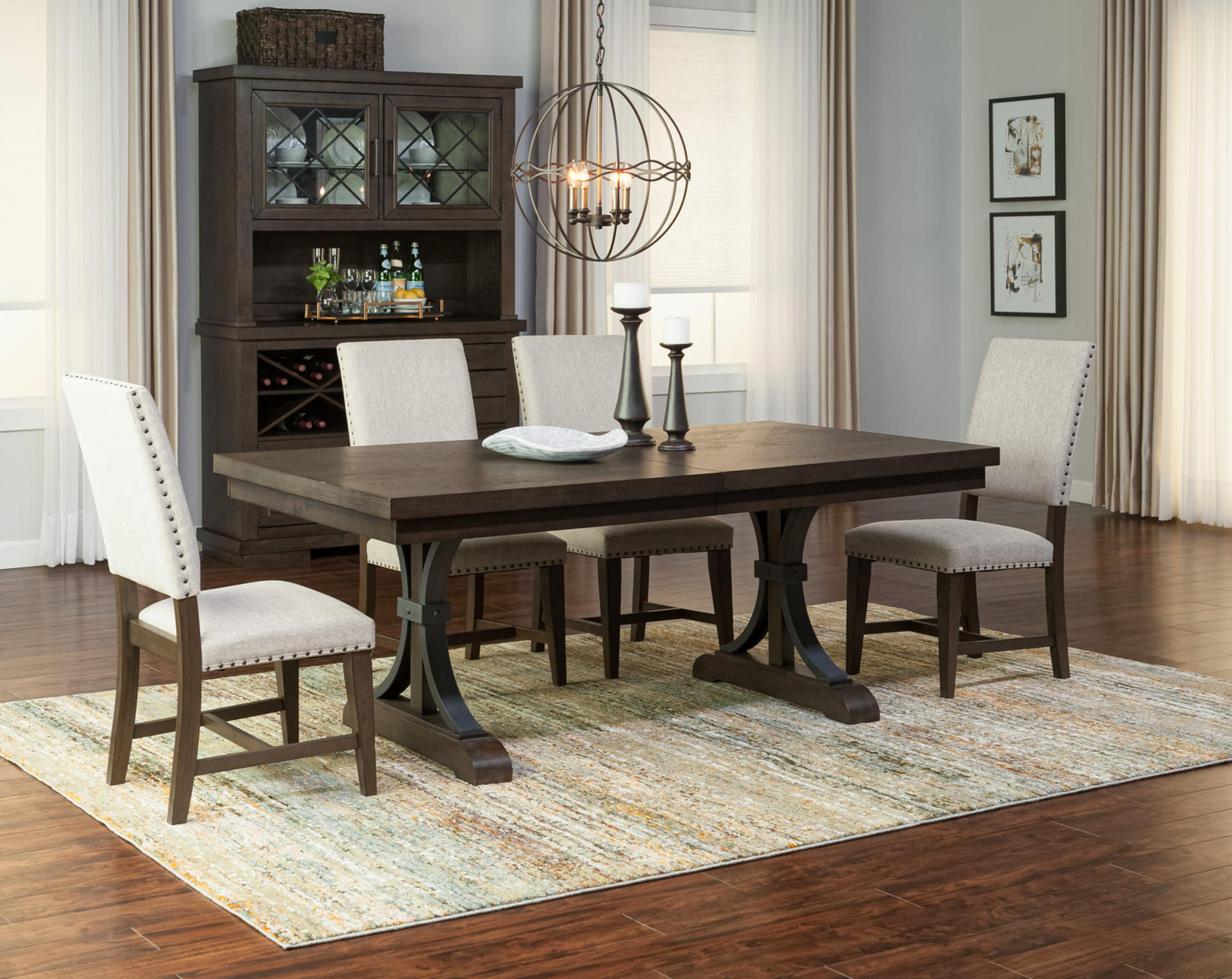
Nothing says “dining room” like a hutch that displays the family’s formal china and glassware. It’s a touch of elegance that sets the room apart! A corner curio can also fulfill this role.
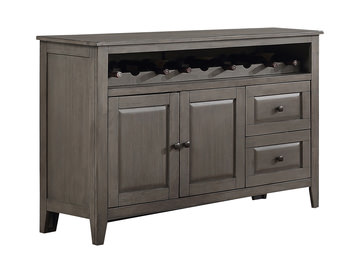
A buffet is practical for storage and service, and it can be a mainstay of a multifunctional dining room. Remember, just because a dining room is formal doesn’t mean it can’t have other uses at other times! The buffet is a great place to stash cards and other supplies for a social night.
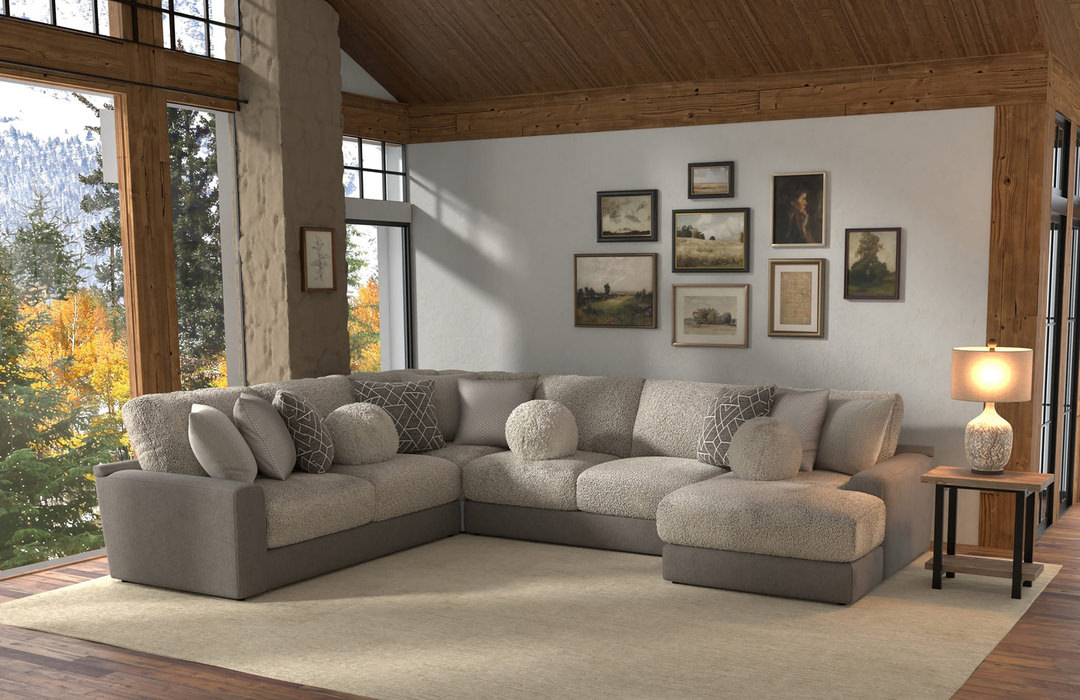
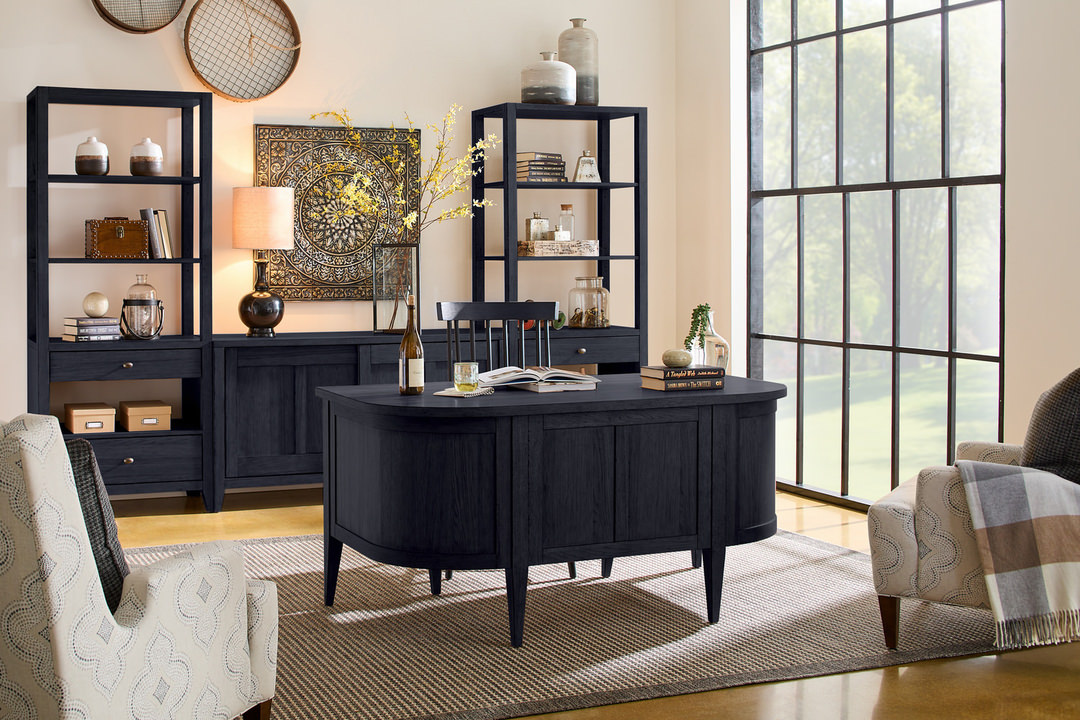
It’s also possible to add a cluster of upholstered furniture to create a sitting room for before and after meals. You can even bring in a bookcase and have the room double as a library!
Dining Decor
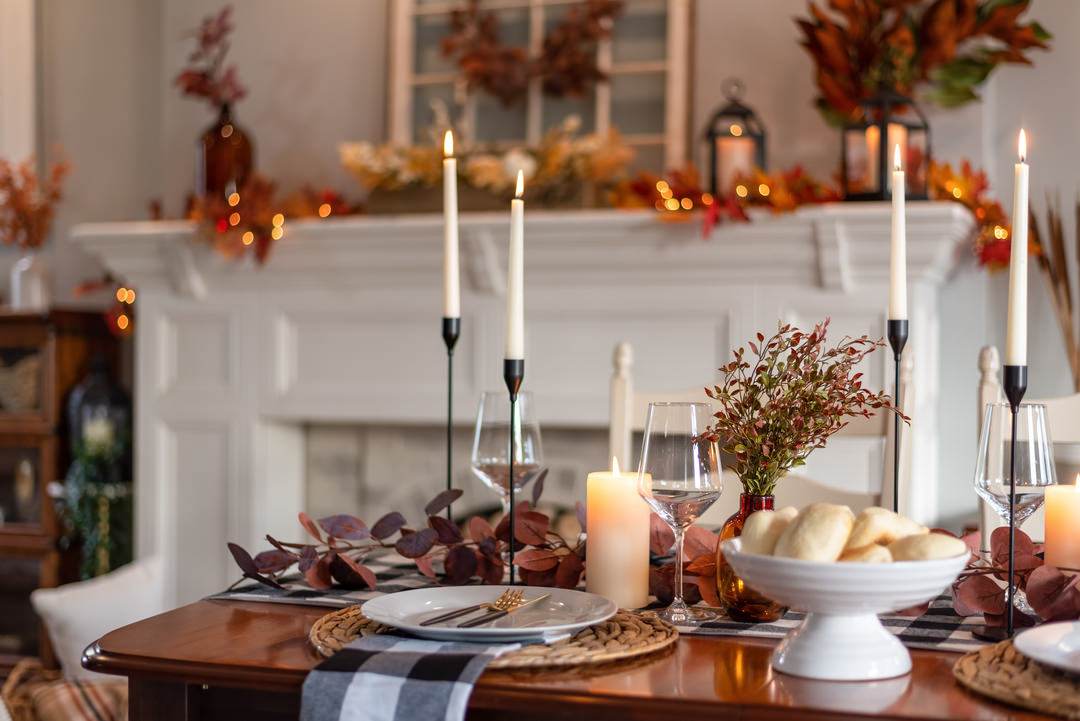
If elegant formality is what you’re after, then put your table setting to work! Refined placemats, decorative coasters, linen napkins and rings, candles and centerpieces all add to the sophistication of the tabletop.
A centered chandelier pulls everything together! Some people choose formal paper for the walls, while others hang artwork that’s a little more stately than art elsewhere in the home.
What If I Have an Open-Concept Home?
In many homes there’s one large living and dining room, but you can still carve out an identifiable dining space! For example, a sofa with its back to the dining area defines a border.
Different flooring on the dining side is another way to set it apart. You might try an area rug under the table, even if it’s a contrasting one on top of carpet.
Other ways to delineate the spaces are different wall colors and different styles of wall art. Also, you could use textured furnishings in the living room and smooth surfaces in the dining space. Or rounded edges in the living area but square ones for dining.
Whether it has its own doorways or shares walls with a living room, a formal dining room is a place where the table becomes a hub to bring people together for meals and for other sociable activities! Once you establish your dining room, you just might find yourself setting the table and making dinner an occasion any night of the week!




2026
September
August
July

June


May
April
March

February

January

2025








Related Products
in stock