Best Waterproof Flooring
What waterproof flooring is best for your bathroom, other moisture-prone rooms?




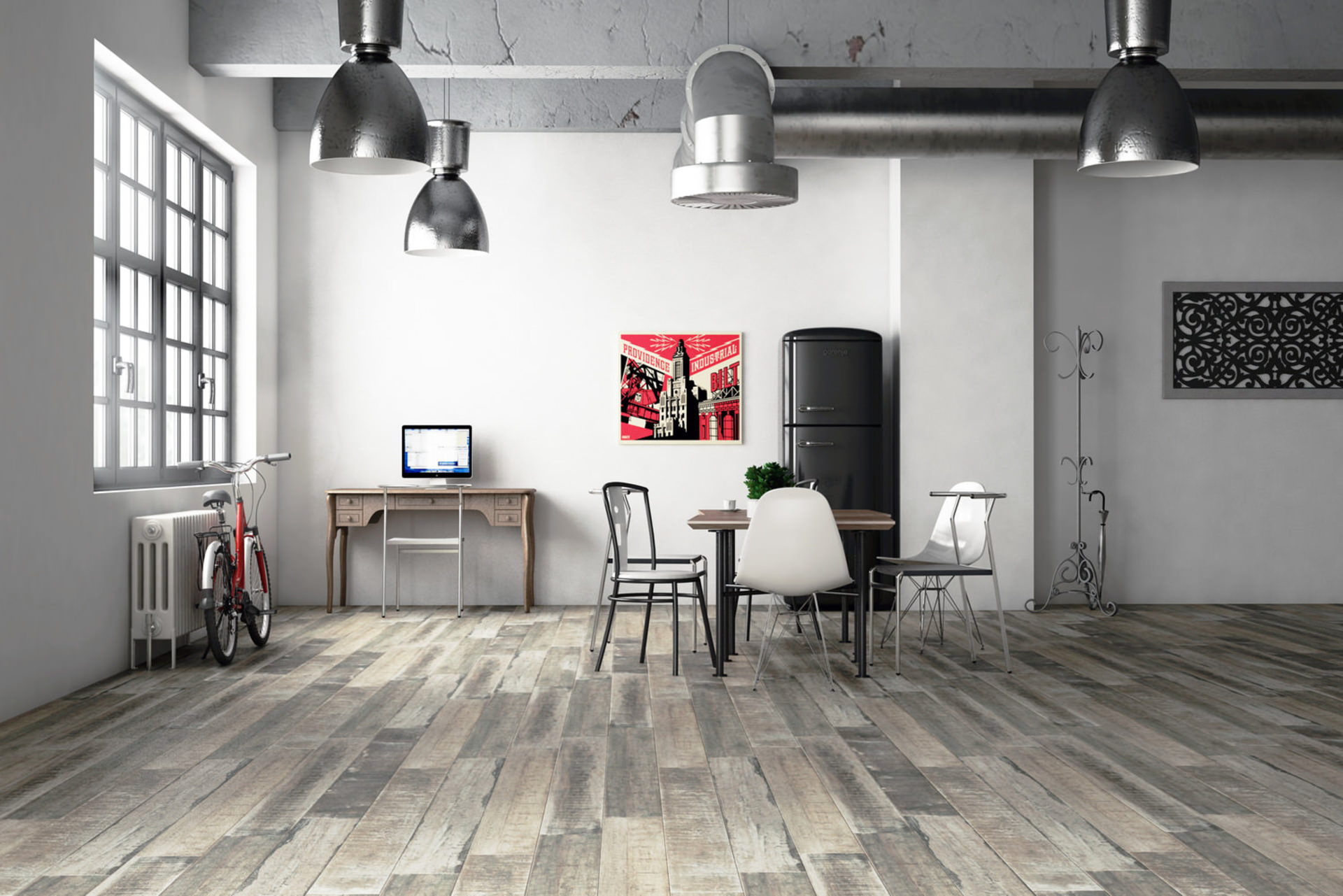
No matter how you try to prevent it, sooner or later your floors will get wet. Drinks are spilled, kids bring their mud puddles indoors, pets have accidents. Pipes leak. Dishwashers flood. Even excessive humidity presents a threat to some floors.
When water is left on floors such as wood, moisture seeps in and makes the flooring expand and warp. Once that happens, there’s nothing you can do to bring back the original integrity. Floors can actually begin to mildew.
How can you protect susceptible rooms such as bathrooms, kitchens and laundry rooms? The best way is to install waterproof or water-resistant flooring. There’s great peace of mind knowing that you literally don’t have to cry over spilled milk. A water-resistant floor will take it in stride.
What’s the difference between waterproof and water resistant, and what’s the best option for you? Keep reading for an explanation.
Waterproof Flooring
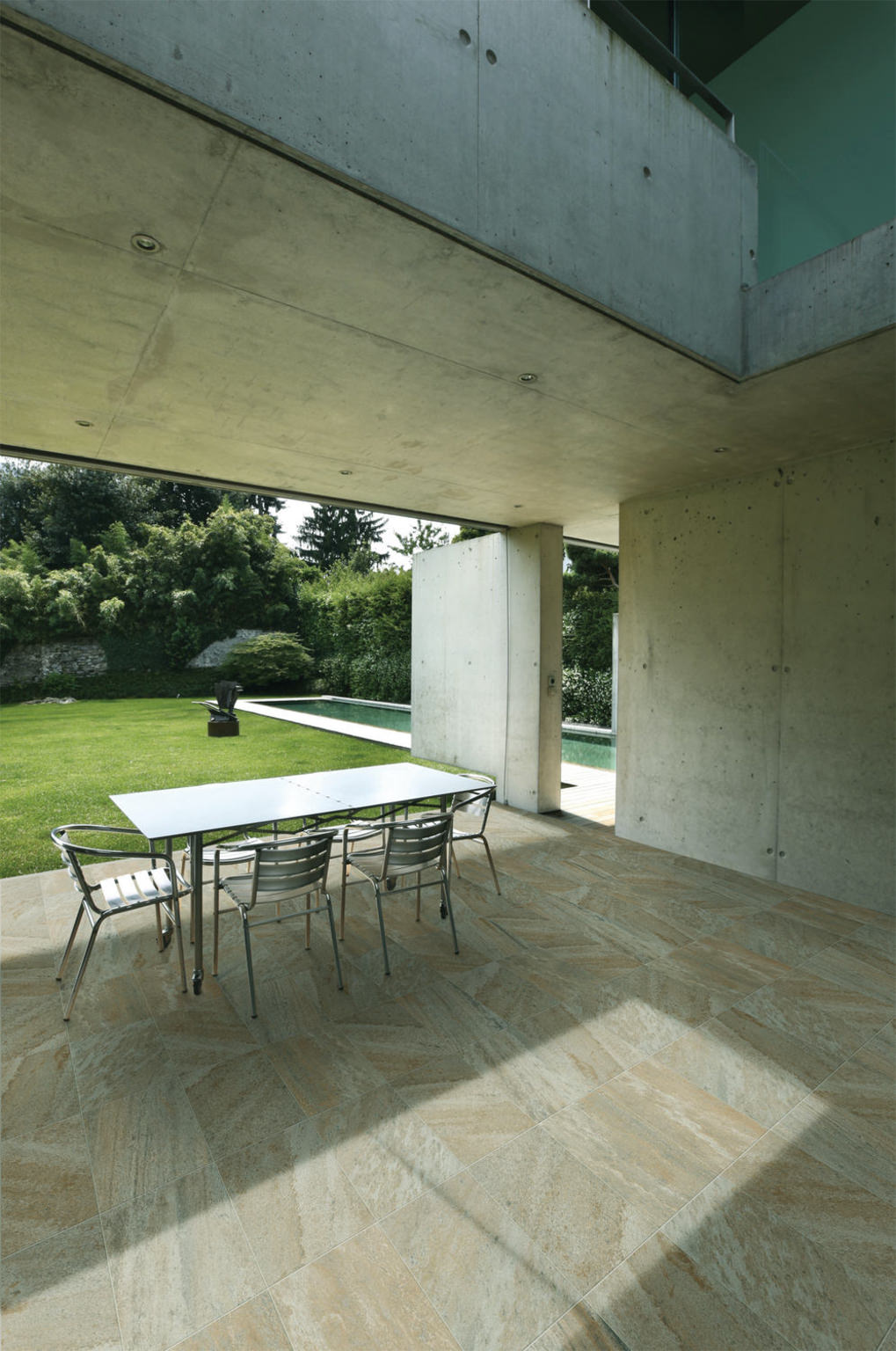
If a floor is truly waterproof, water can sit on the floor for long periods of time without causing damage. The best waterproof flooring options are tile and vinyl.
Ceramic and Porcelain Tile
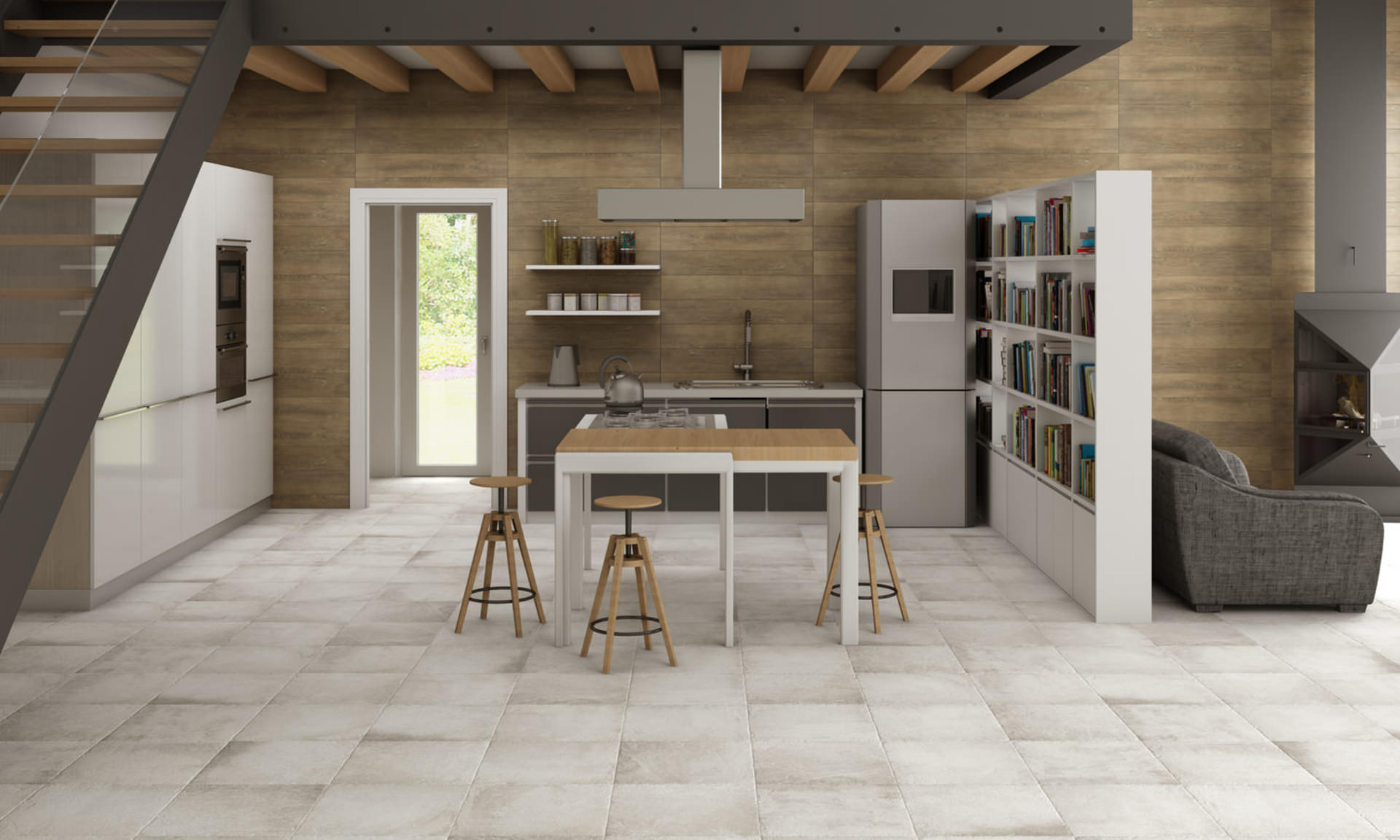
Ceramic and porcelain tile are excellent waterproof choices for kitchens and bathrooms. They come in a variety of attractive patterns and colors, from natural and warm stone or wood-appearing designs to contemporary designs like eye-catching herringbone patterns. Plus, they’re virtually impenetrable and easy to clean and maintain.
To be waterproof, the tile floor has to be property installed and grouted. Grout is not waterproof. It must be sealed and occasionally resealed to ensure that the floor remains watertight. If a tile floor is poorly laid and there are gaps between the tiles, liquid can seep through and damage the subfloor.
Many experts favor unglazed over glazed tile on a floor that might get wet. It can be thicker and denser, and, more important, it’s more slip-resistant.
Between porcelain and ceramic tile, is there a reason to favor one over the other? For normal indoor applications, not really. Porcelain is denser and slightly less penetrable. It’s also more expensive and more difficult to cut. Ceramic should not be used outside, but it’s just fine in your kitchen.
Luxury Vinyl Flooring
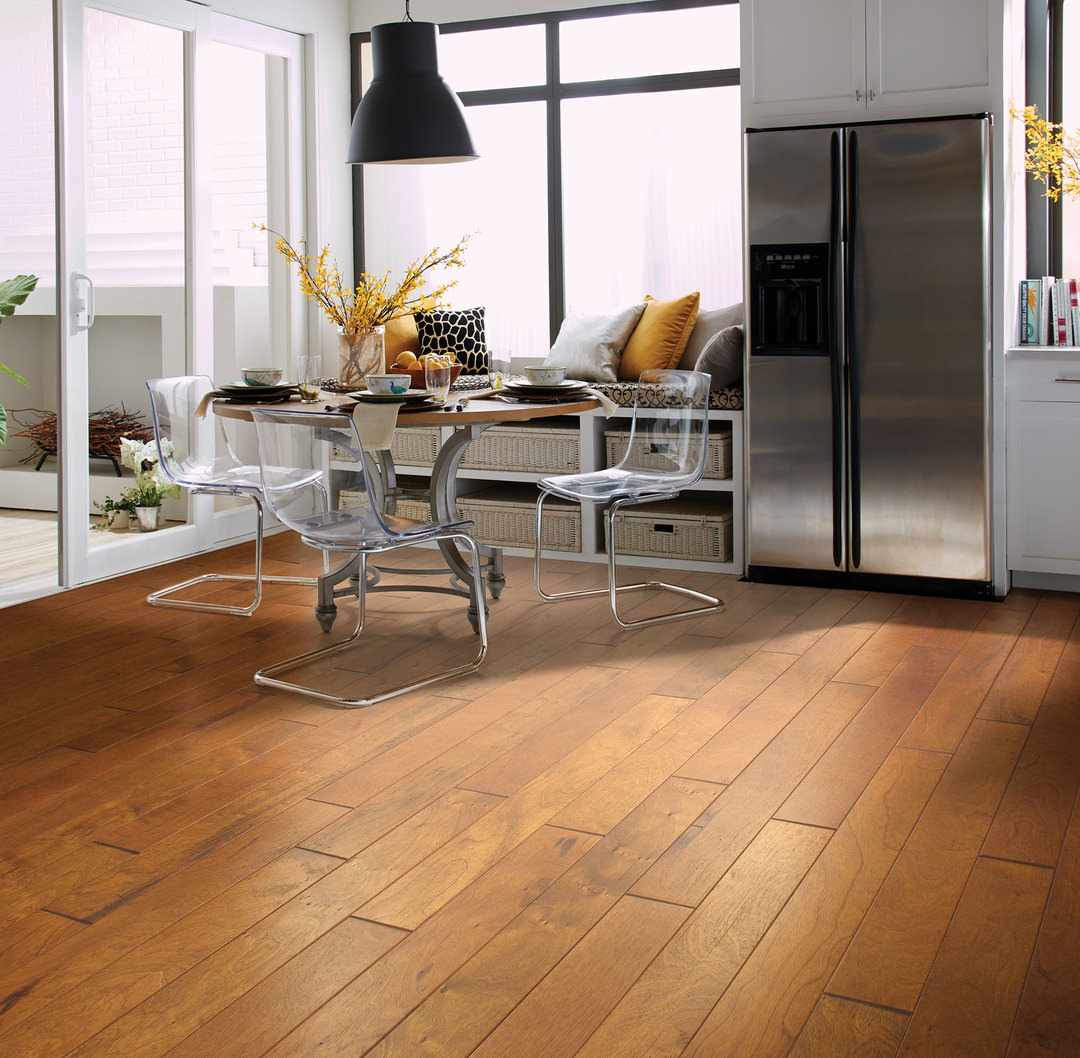
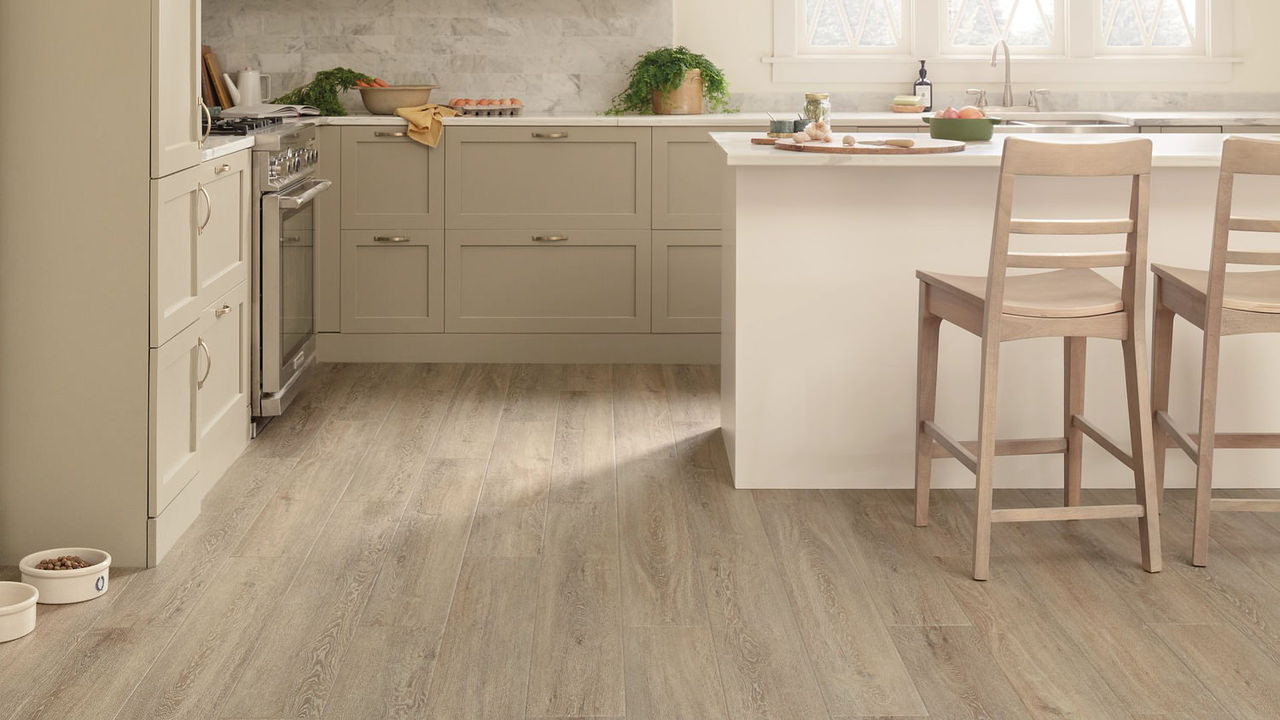
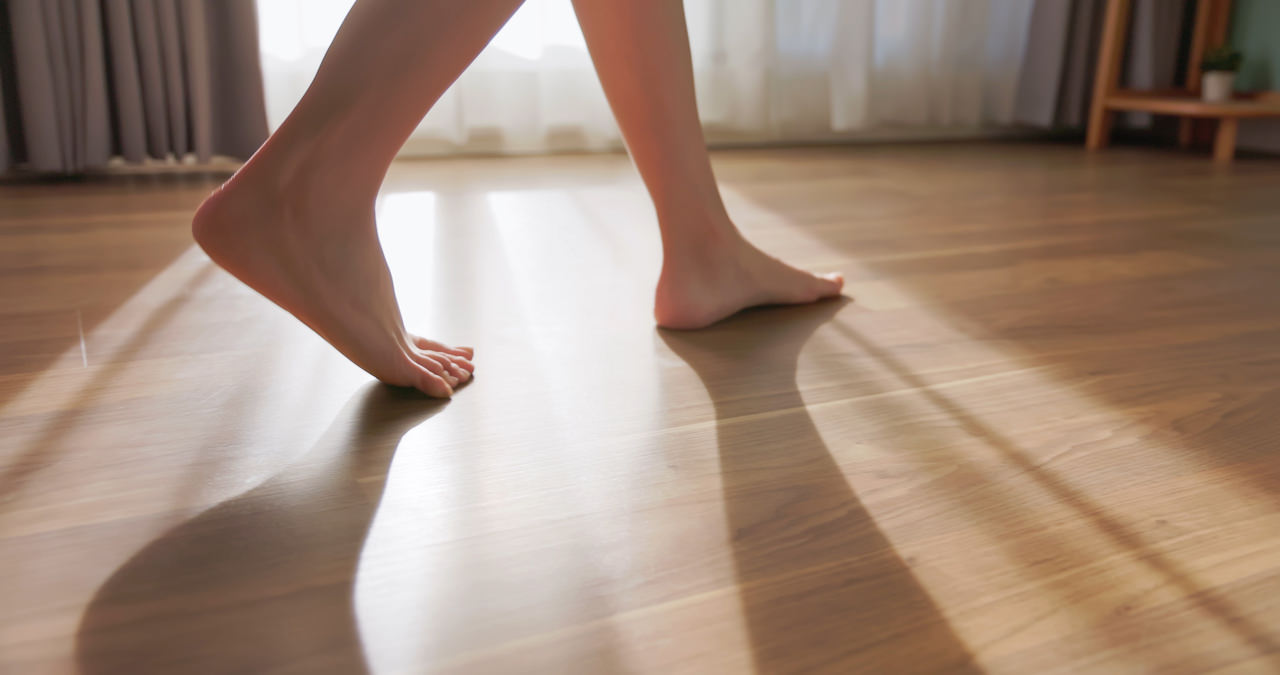
Vinyl flooring is becoming increasingly popular, and for good reason. It’s less expensive than ceramic tile and it’s a cinch to maintain. It comes in different shapes, in tiles and planks. Luxury vinyl tile (LVT) is generally offered in sizes and patterns that resemble ceramic tile and stone, while waterproof luxury vinyl plank (LVP) flooring comes in longer sections that look like wood, amongst other popular looks. Between the two, you’ll find all the most popular styles from classic stone looks like marble, to trendy distressed wood looks.
Most luxury vinyl tile and plank come in interlocking sections with seams that provide a waterproof seal. Vinyl has several layers. The top layer, or wear layer, keeps water out, and the core, which makes up most of the plank’s thickness, is waterproof as well. A rigid core is stable and won’t be affected by humidity.
Like ceramic and porcelain tile, vinyl must be properly installed to be waterproof and protect the subfloor. However, vinyl doesn’t need grout. The interlocking seams do the job.
While luxury vinyl tile and plank are just as waterproof as ceramic and porcelain, bear in mind that they’re not as sturdy. Dropped pots and pans are more likely to cause scratches and dents. A lot of people still prefer the heavier tiles for the kitchen.
Sheet vinyl is another waterproof option. It comes in large rolls, usually 6 or 12 feet, so there are fewer seams. It had fallen out of fashion for a while but it’s making something of a comeback, especially with retro patterning.
Water Resistant Flooring
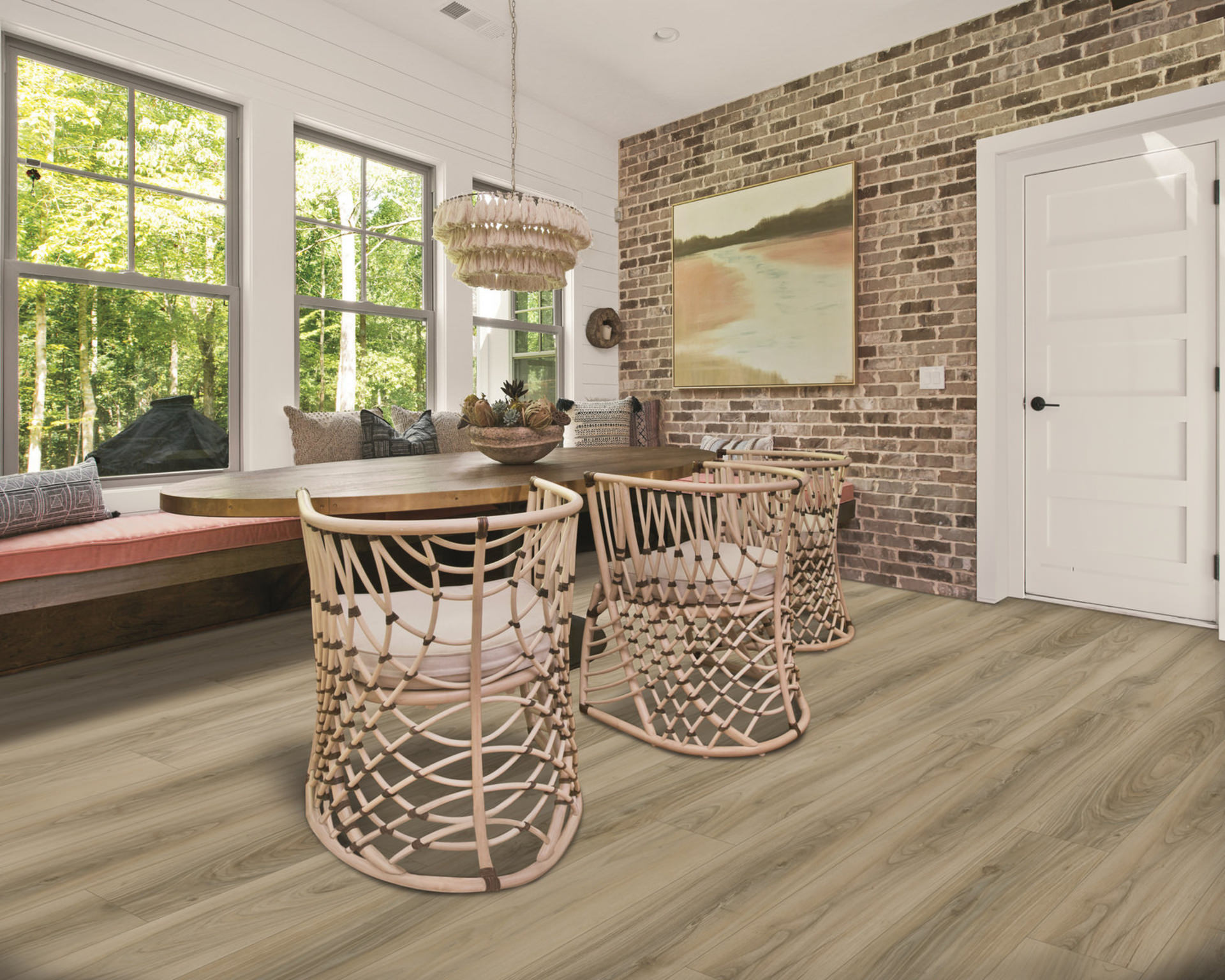
Water resistant flooring also offers protection from water damage, but only for a limited amount of time. Eventually standing water will seep past the barrier and damage the interior of the product as well as the subfloor.
With water resistant flooring, spills need to wiped up promptly. sWater resistant flooring is a good choice for rooms where water doesn’t get tracked in and spills are infrequent. It’s suitable for offices, dens, family rooms and bedrooms.
Water Resistant Laminate Flooring
Laminate is the most commonly used water-resistant flooring. It’s a composite product. The core is usually made of melamine resin and wood fibers. These are generally susceptible to water damage and will swell and warp if they get waterlogged. Laminate can also be subject to water staining.
Laminates vary widely in their degree of water resistance. It’s important to understand what you’re buying. Some manufactures refer to their products as waterproof laminate flooring, and many products have very good water repellent treatments on their surfaces. However, with any laminate product, standing water will eventually get past the seams and damage the core and the subfloor.
Laminate tends to be a less expensive flooring option. It’s available in attractive finishes that resemble wood, tile and stone. Many have excellent water-resistant surfaces that clean easily. Even there, though, you have to be cautious. It’s okay to mop carefully, but you can’t just slosh water on the floor and let it soak while you mop it up.
Water Resistant or Waterproof?
If you occasionally knock over a drink or suffer a few soggy footprints, a water-resistant floor such as laminate is a good option that offers many cost benefits, including cost and maintenance. However, in a room where the floor routinely gets wet and flooding may take place, it’s better to install a tile or vinyl floor that’s truly waterproof.






2026
October
September
August
July



June


May
April


March

February



January


2025