Small Space Furniture: Multifunctional Solutions to Maximize Every Square Foot
Discover the best multifunctional furniture and storage solutions that make apartments and condos feel spacious, organized, and beautifully designed.




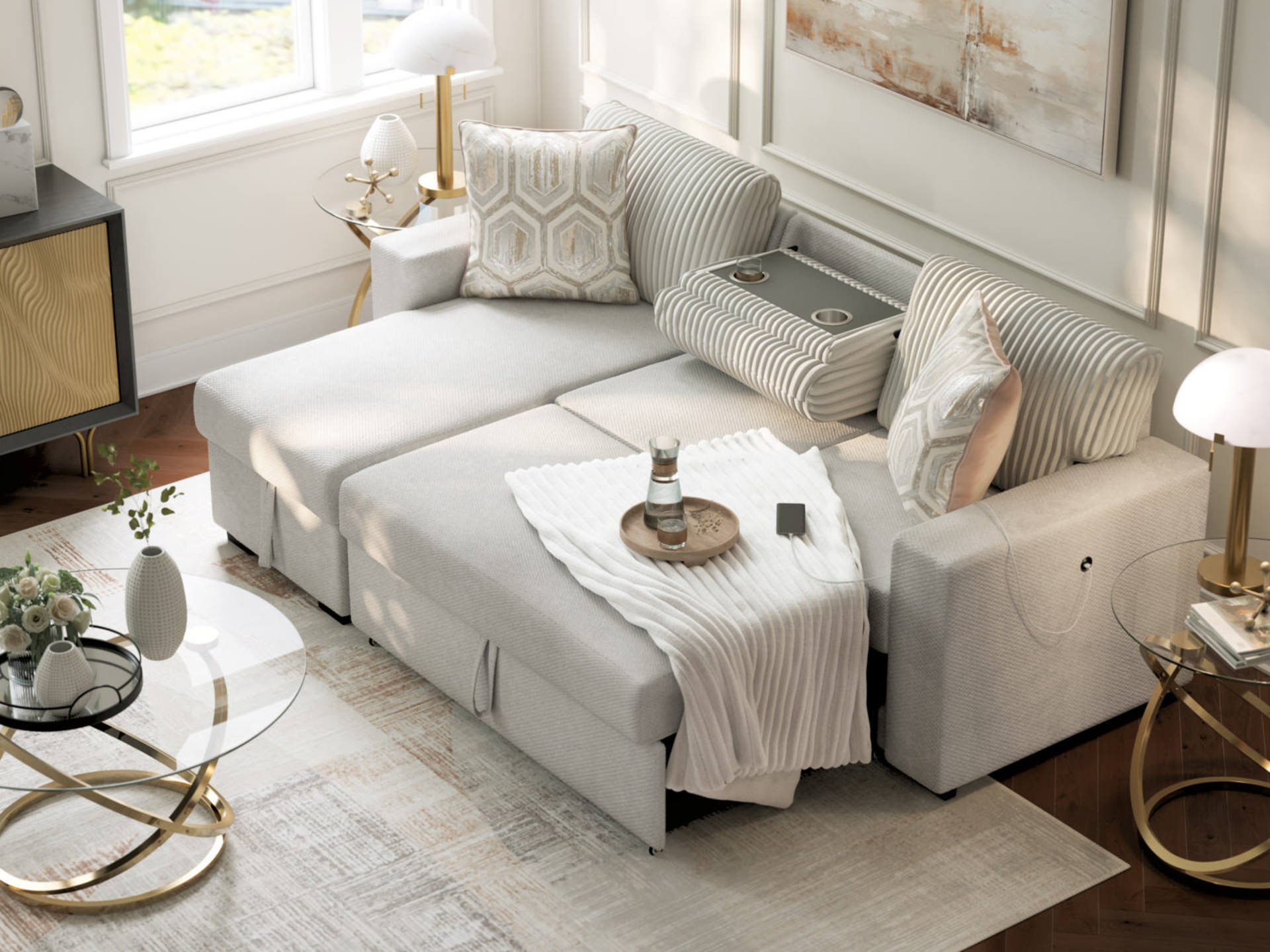
What furniture is best for small spaces?
The best small space furniture combines style with function. Look for storage ottomans, sleeper sofas, extendable dining tables, wall-mounted shelving, and compact sectionals. Pieces that serve more than one purpose help maximize square footage while keeping apartments and condos organized and stylish.
Moving into a new apartment or downsizing this spring? Small spaces don’t have to feel limiting. With thoughtfully chosen small space furniture, you can create a home that feels open, functional, and beautifully designed—no matter the square footage.
Why is Multifunctional Furniture a Game-Changer for small spaces?
When every square foot matters, your furniture should work harder for you. Multifunctional furniture combines style and practicality, allowing one piece to solve multiple needs.
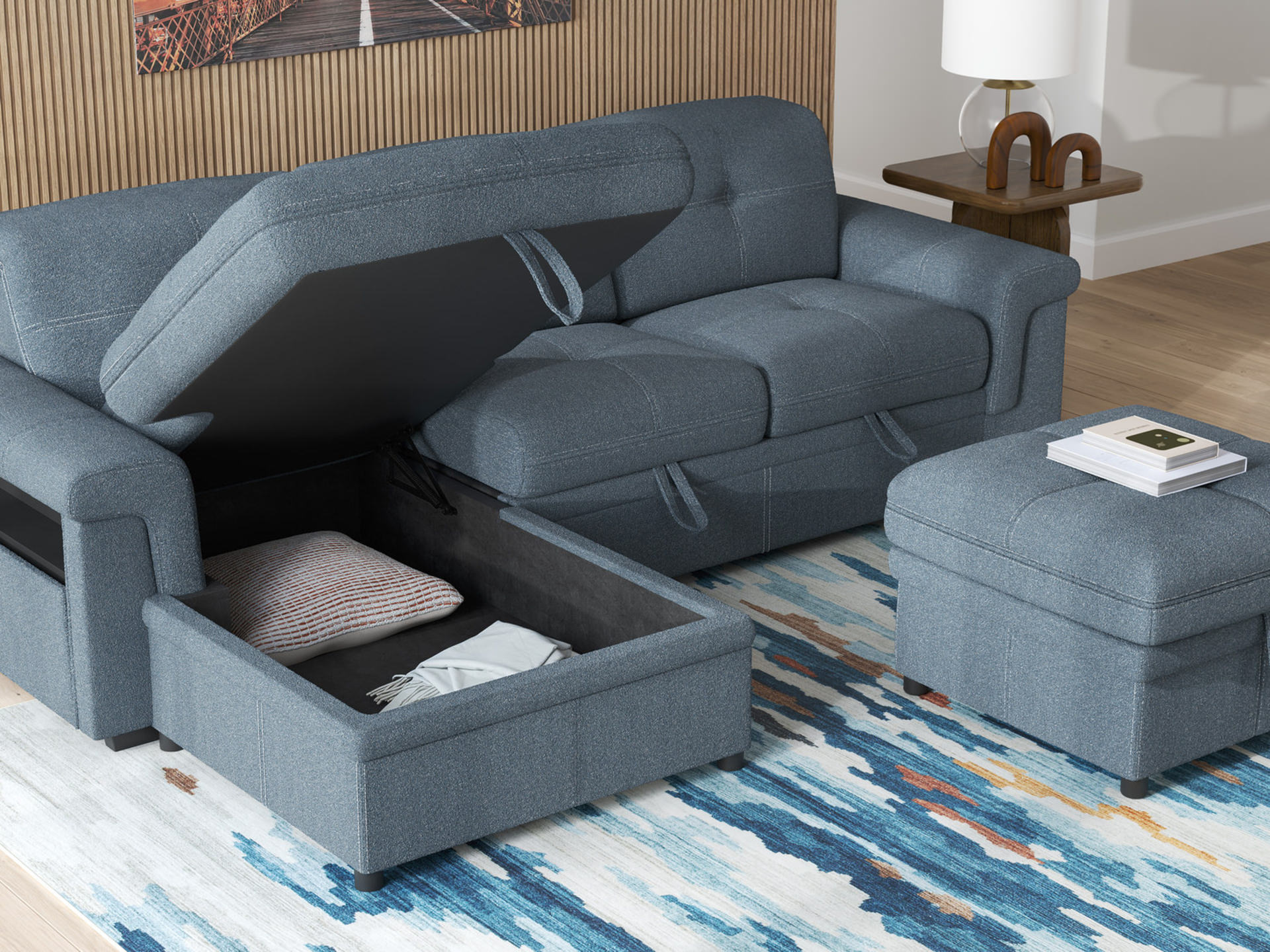
Top 5 Space-Saving Furniture Pieces
If you’re wondering where to start, these are the must-have pieces for maximizing a small home:
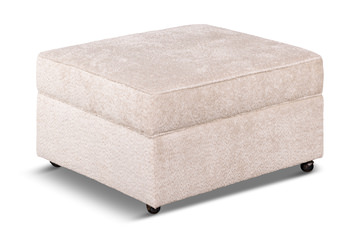
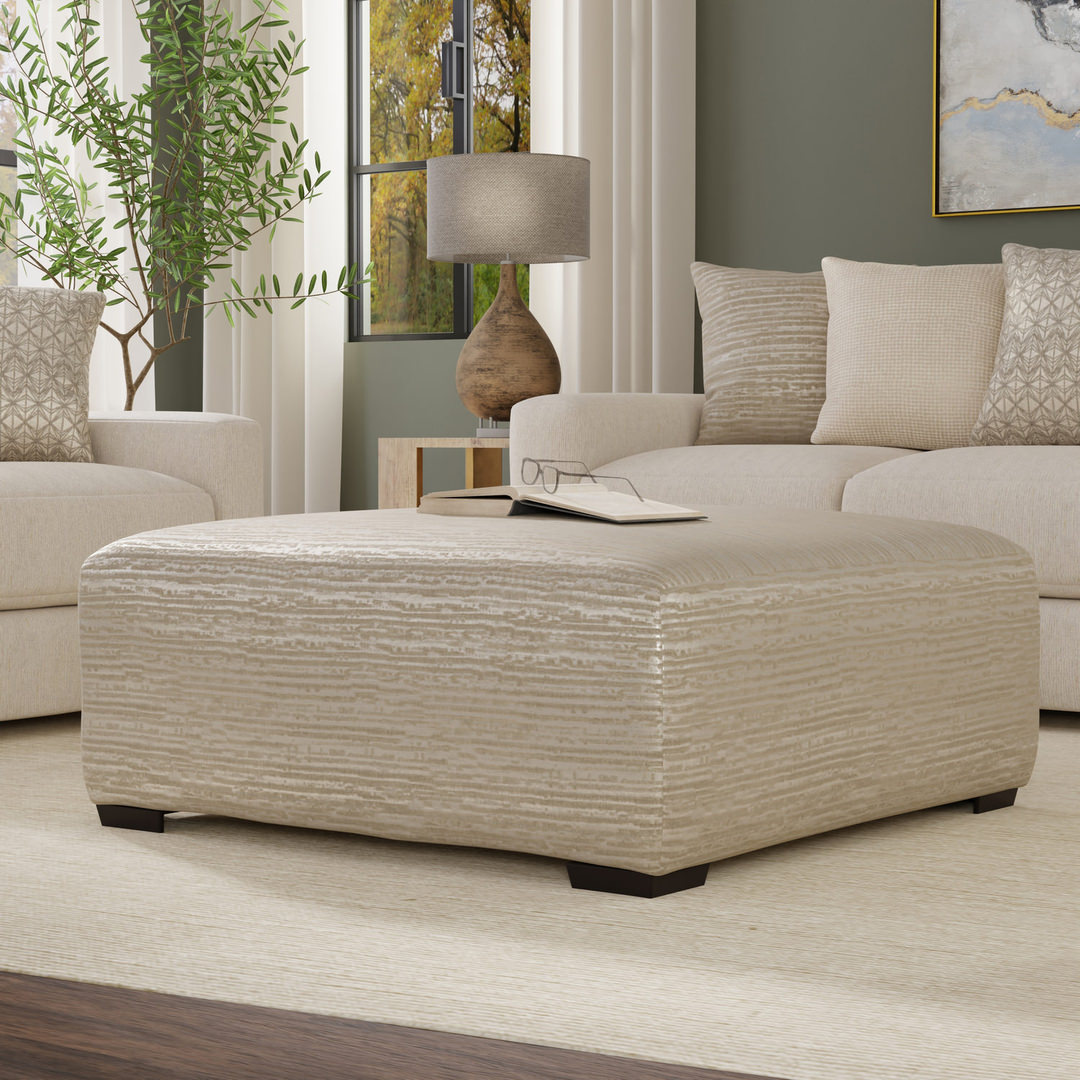
Storage Ottomans – Perfect as a footrest, extra seating, or hidden storage for throws and games.
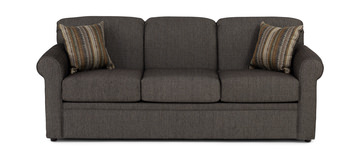
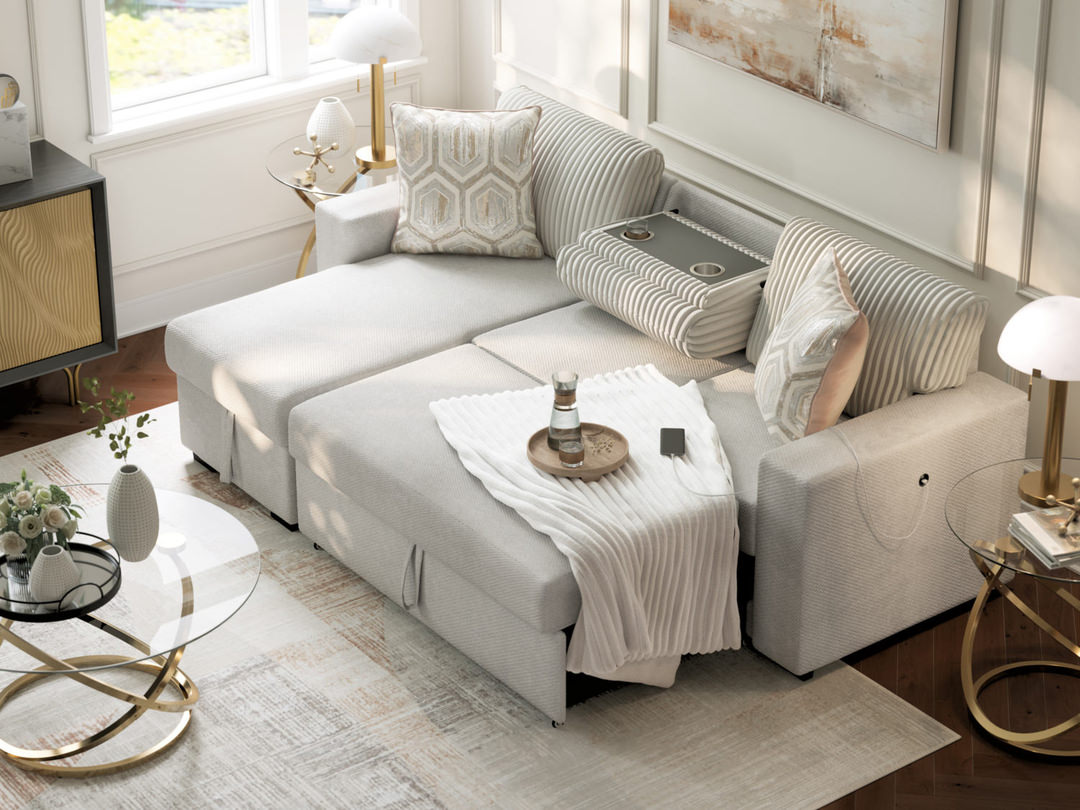
Sleeper Sofas – Ideal for hosting guests without sacrificing everyday comfort.
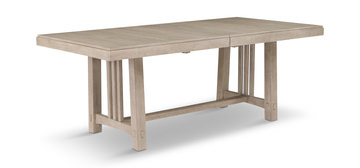
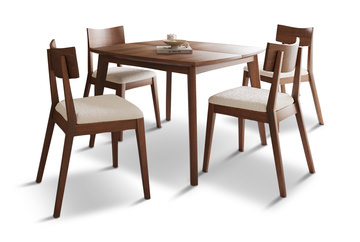
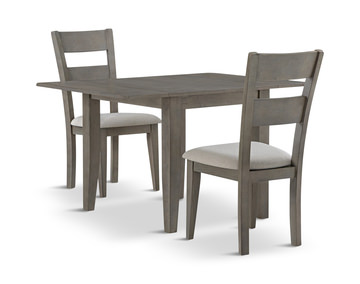
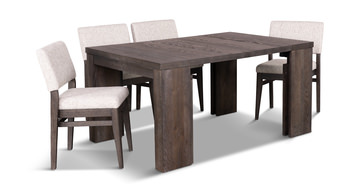
Extendable Dining Tables – Compact for daily meals, expandable for entertaining.
Wall-Mounted Shelving – Keeps floors clear while maximizing vertical storage.
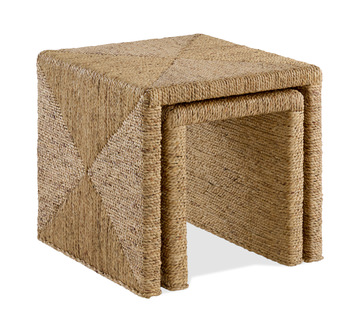
Nesting Tables – Use them together or separately, then tuck them away when not needed.
Each of these pieces delivers flexibility without overwhelming your layout—exactly what small space furniture should do.
What Size Sofa Fits in a Small Living Room?
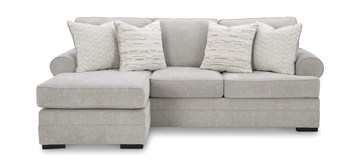
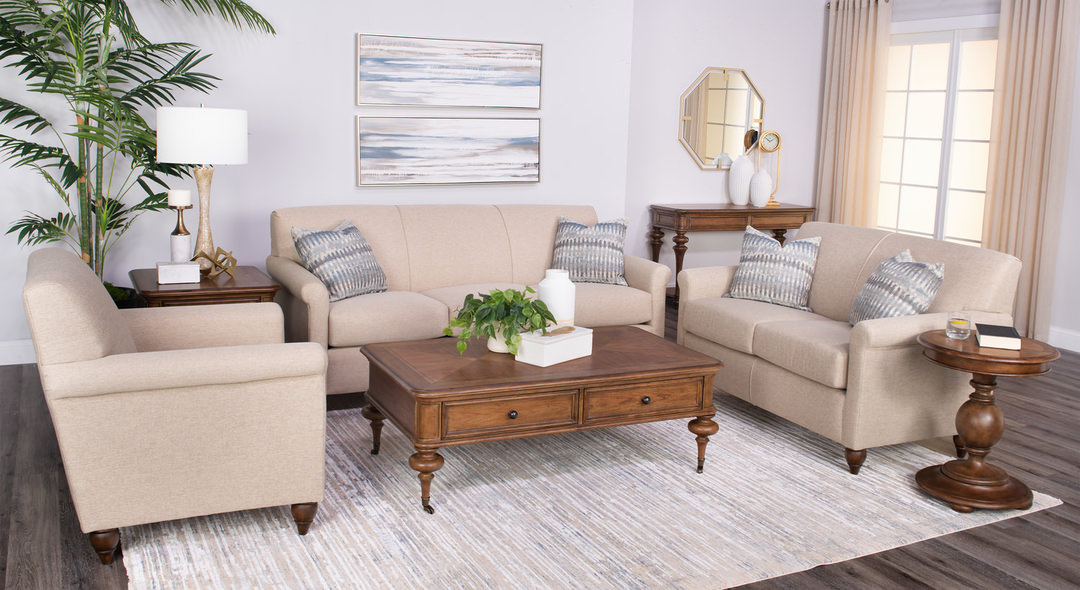
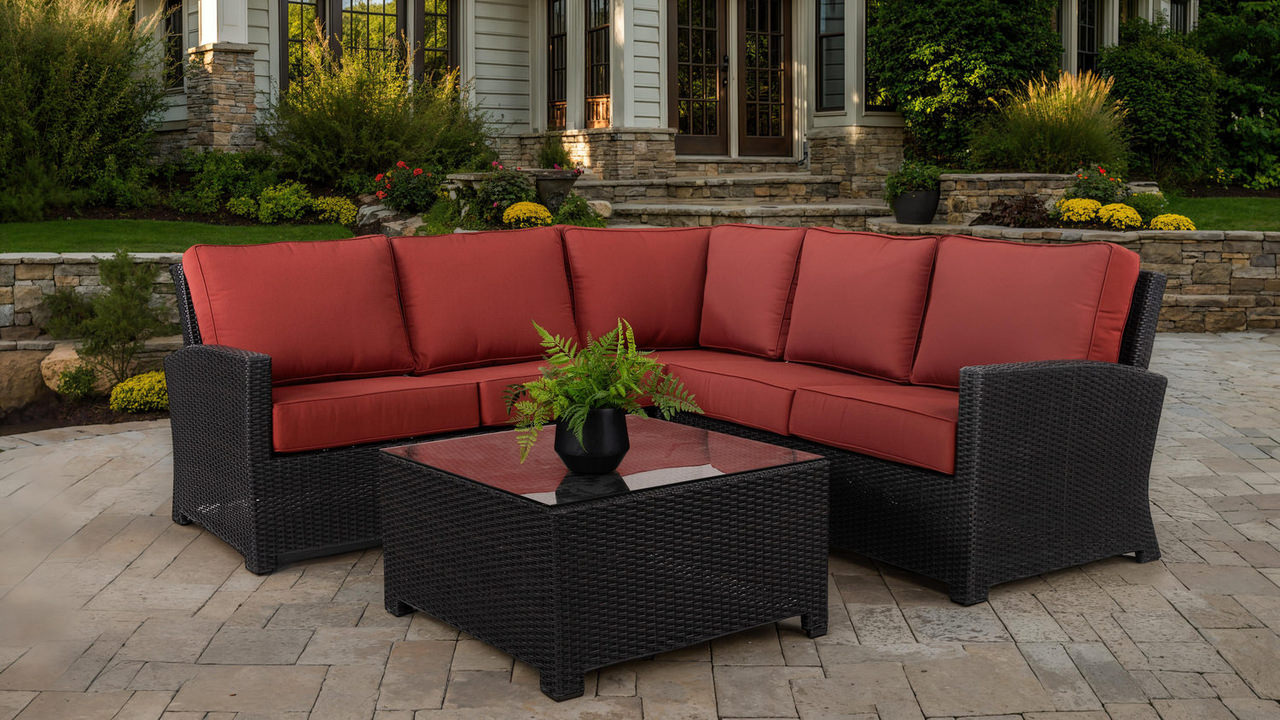
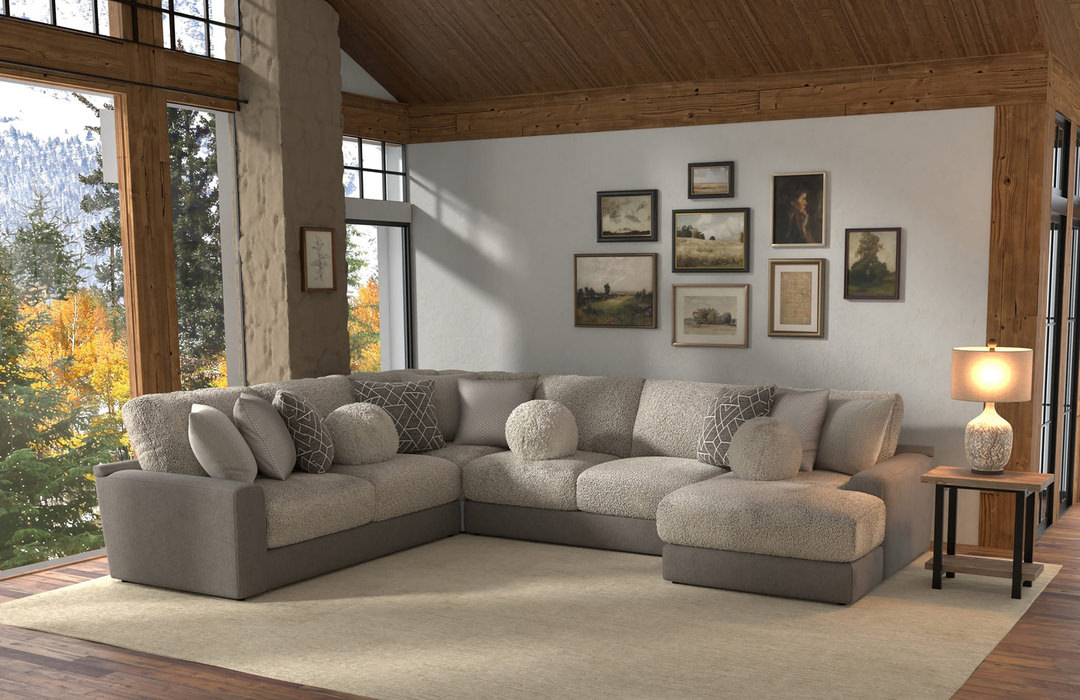
Choosing the right sofa size is critical. In most small living rooms, sofas between 72 and 84 inches wide work best. Compact sectionals with a shorter chaise can also be a great solution, especially in open-concept apartments.
Here are a few guidelines to help you decide:
Leave at least 18 inches between the sofa and coffee table.
Maintain 30–36 inches of walking space for main pathways.
Opt for sofas with exposed legs to create a lighter, more open look.
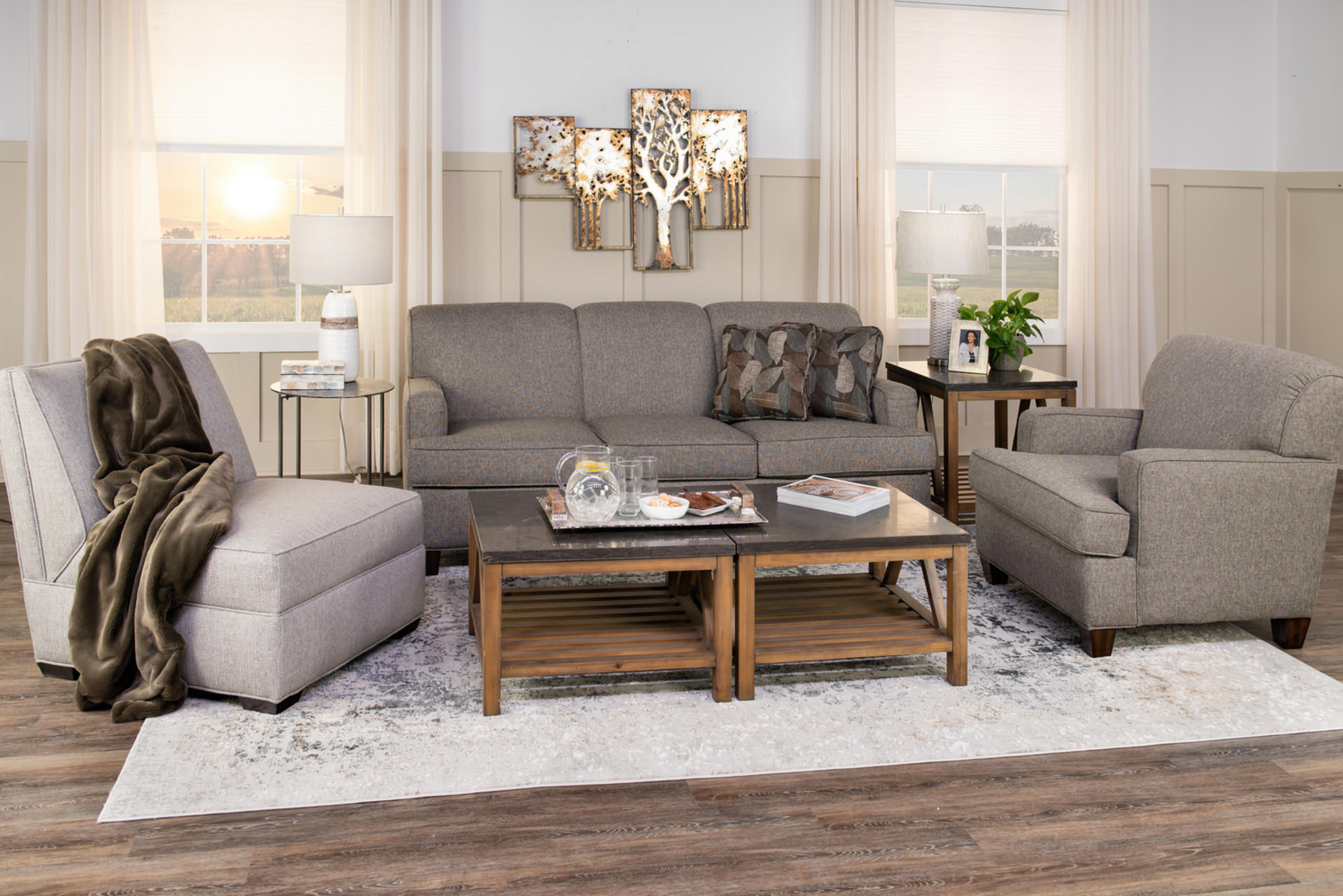
In tighter layouts, apartment-size sofas or loveseats can prevent the room from feeling crowded. And don’t overlook sleeper sofas—they’re available in compact silhouettes that fit beautifully into smaller living rooms while offering overnight functionality.
For more guidance on selecting the right seating and layout, explore HOM’s Living Room Buying Guide to help you plan with confidence.
How Do You Maximize Storage in a Small Space?
Maximizing storage in a small space is all about thinking vertically, choosing hidden storage, and reducing visual clutter.
Here’s how to do it effectively:
1. Use Vertical Storage
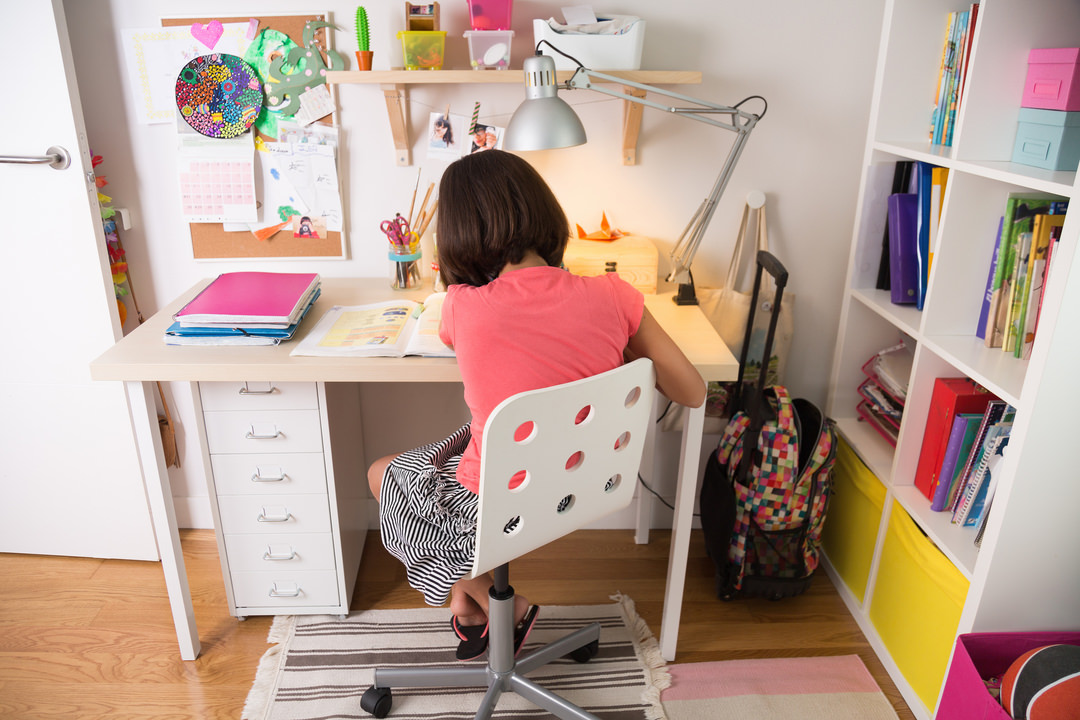
When floor space is limited, look up. Tall bookcases, wall-mounted shelving, and floating cabinets draw the eye upward and create storage without crowding the room.
2. Choose Storage Furniture
Storage furniture keeps essentials tucked away. Consider:
Storage ottomans
Bed frames with drawers
Media consoles with concealed compartments
These pieces eliminate the need for bulky extra storage units.
3. Define Zones in Open Layouts
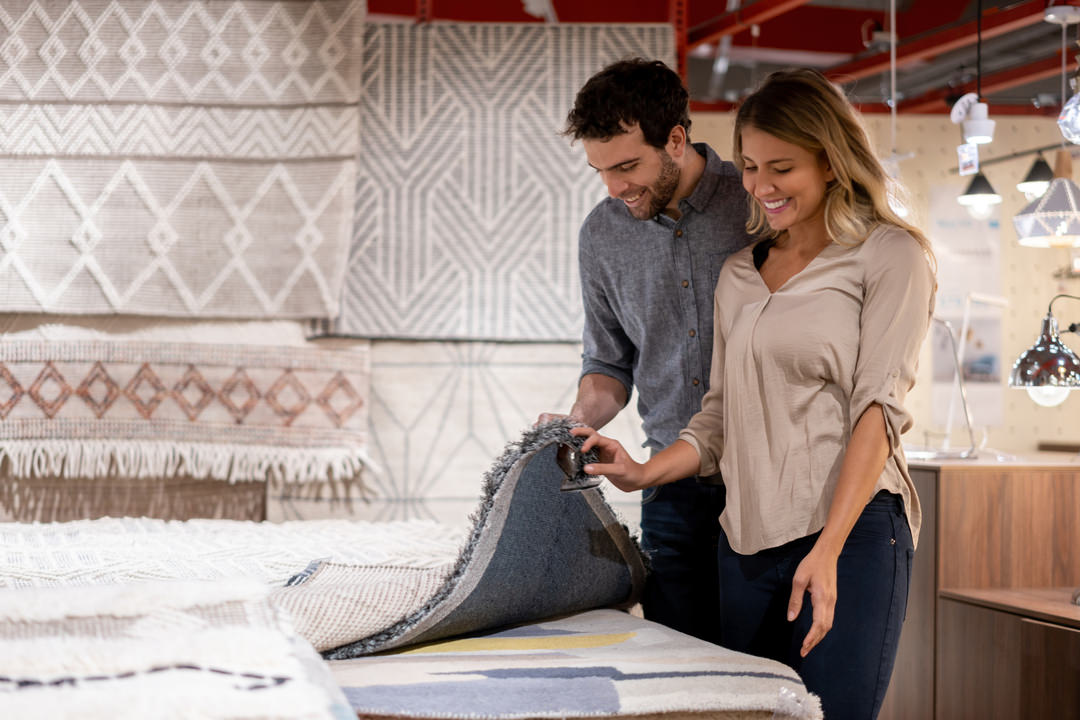
In apartments and condos, open-concept living is common. Use rugs, console tables, or compact sectionals to visually define areas for lounging, dining, and working—without building walls. This keeps your space feeling organized and intentional.
4. Go Light and Reflective
Mirrors bounce light and make rooms feel larger. Light-colored upholstery and wood finishes brighten the room and visually expand the space.
5. Measure Before You Buy
Always measure your room, entryways, and furniture dimensions before purchasing. Create a simple floor plan (even with painter’s tape on the floor) to visualize how pieces will fit.
When you combine these strategies, your home instantly feels more spacious and functional.
Smart Design Tricks That Make Small Rooms Feel Bigger
Beyond storage furniture, design choices can dramatically change how a room feels.
Choose Furniture with Legs
Sofas, chairs, and consoles with visible legs create openness by allowing light to flow underneath.
Keep Sightlines Clear
Avoid tall, bulky furniture near entryways or windows. Lower-profile pieces preserve natural light and openness.
Stick to a Cohesive Color Palette
Too many contrasting colors can visually chop up a room. Neutral foundations with a few intentional accents create calm continuity.
Layer Your Lighting
Small spaces need good lighting. Combine floor lamps, table lamps, and overhead fixtures to prevent dark corners and create depth.
These simple adjustments amplify the impact of your small space furniture and help every piece shine.
Can you entertain in a small space?
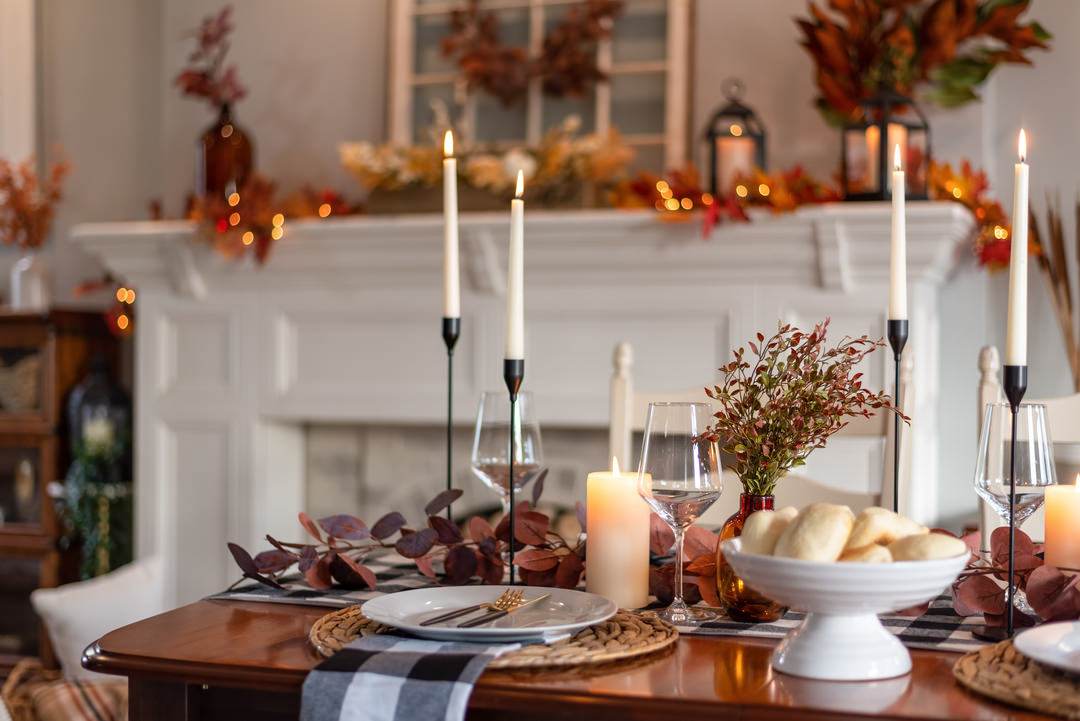
Absolutely. Spring and summer are prime seasons for housewarming parties and casual gatherings. With the right multifunctional furniture, entertaining is easier than you think.
An extendable dining table allows you to host comfortably without dedicating permanent space to a large table. Nesting tables can be separated for drinks and snacks, then tucked away afterward.
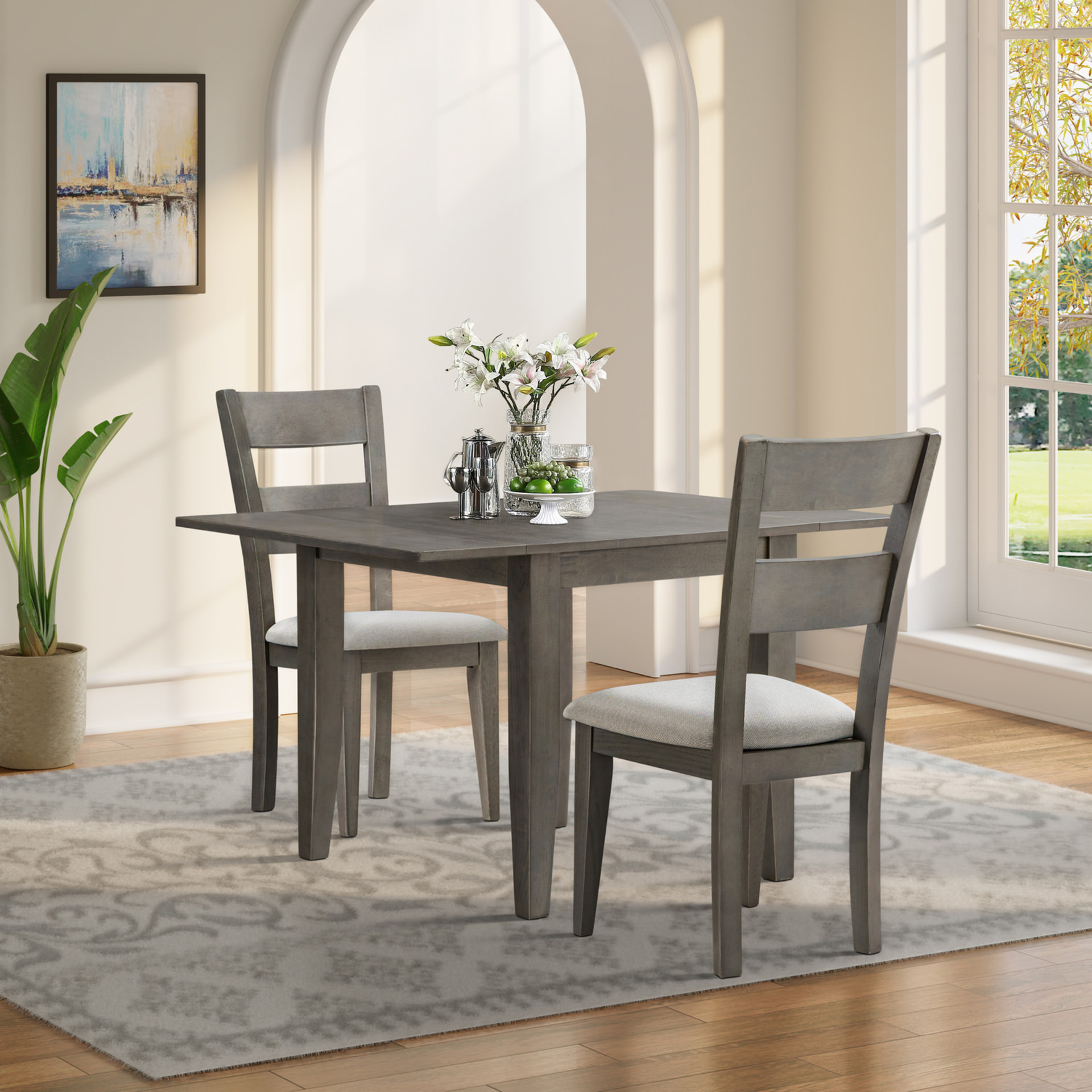
Small homes can still deliver big hospitality.
Planning Your Layout Like a Pro
Before you buy, take time to plan.
Measure your space carefully (length, width, and ceiling height).
Map out walking paths.
Identify focal points (TV, windows, fireplace).
Decide which functions the room must serve.
When you approach your layout with intention, small space furniture becomes an asset rather than a challenge.
If you’re unsure where to begin, visiting a HOM showroom or browsing online collections can help you visualize scaled-down sofas, compact sectionals, and storage furniture designed specifically for smaller homes.
Quick Answers: Small Space Furniture FAQs
What is the best furniture for a small apartment? Multifunctional pieces like sleeper sofas, storage ottomans, and extendable dining tables are ideal for small apartments because they serve multiple purposes without crowding the space.
How do you make a small living room look bigger? Use light-colored furniture, mirrors, and pieces with exposed legs. Keep sightlines clear and choose a cohesive color palette to visually expand the room.
How much space should be between furniture in a small room? Leave at least 18 inches between a sofa and coffee table, and maintain 30–36 inches of clear walking space along main pathways.
Where can I find small space furniture in the Twin Cities? HOM Furniture carries a wide selection of small space and multifunctional furniture at showrooms across the upper Midwest.
Small Space, Big Potential
Living in an apartment or condo doesn’t mean sacrificing comfort or style. With thoughtfully selected small space furniture, your home can feel open, organized, and inviting.
By choosing multifunctional furniture, prioritizing smart storage furniture solutions, and planning your layout carefully, you’ll create a space that truly works for your lifestyle—whether you’re hosting friends, relaxing after work, or settling into a new home this moving season.
At HOM Furniture, we believe small spaces hold big design potential. With the right pieces, every square foot becomes an opportunity.






2026
September
August
July



June


May

April


March

February

January


2025








Related Products