The Home Office Refresh You’ve Been Putting Off: Fall Is the Perfect Time to Finally Do It
Shorter days and more time indoors make fall the ideal season to invest in a workspace that actually works for you.




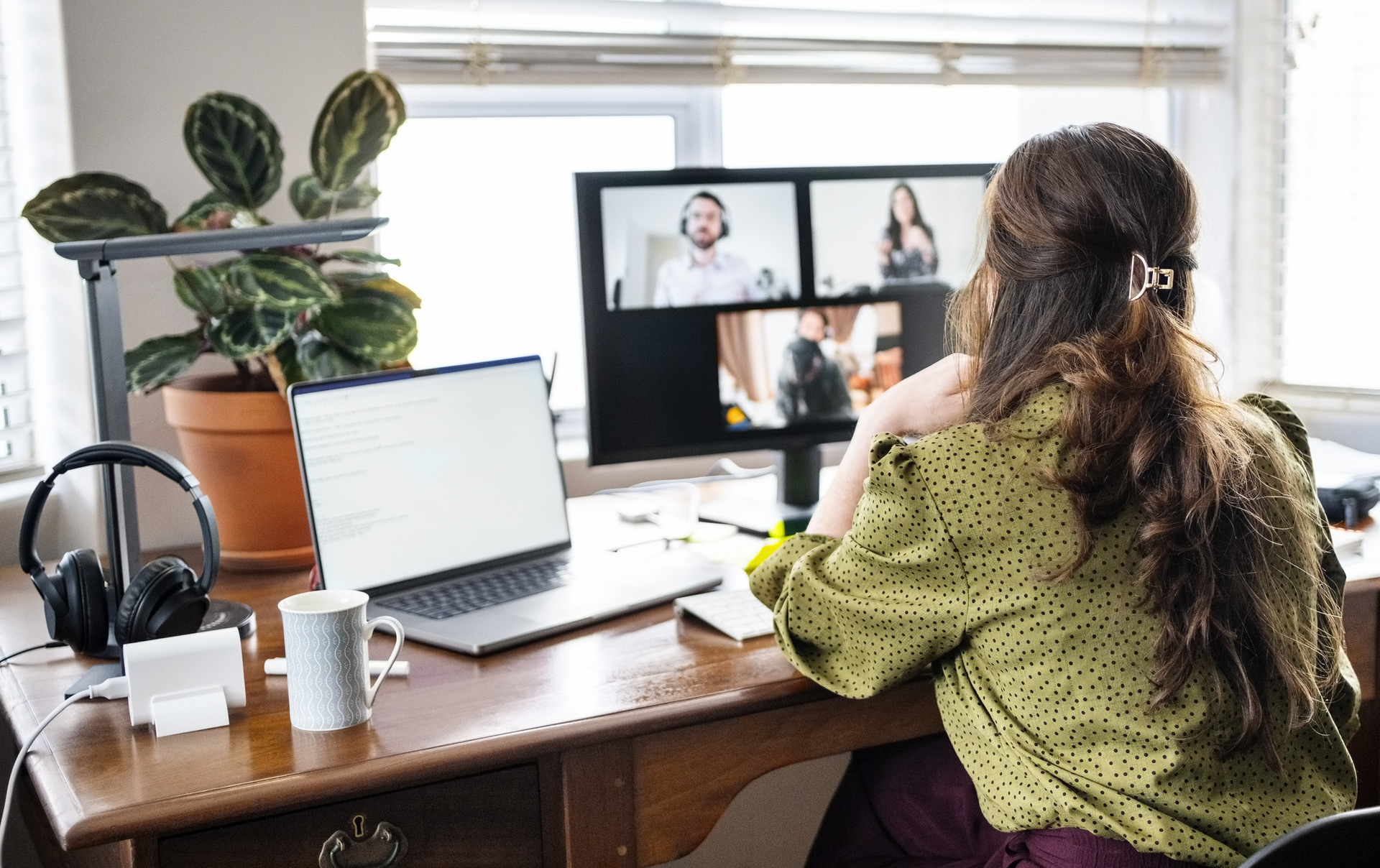
As summer winds down and routines settle back into place, your home office deserves a fresh look, too.
Fall naturally brings more time indoors, shorter daylight hours, and a renewed focus on work, school, and daily routines. Whether you work from home full-time, split your week between the office and home, or simply need a dedicated place to pay bills and stay organized, updating your workspace now can make the months ahead more comfortable and productive.
The best fall workspace update doesn't require a complete remodel. Often, upgrading your home office furniture comes down to four important decisions: choosing the right desk, investing in a supportive chair, improving storage, and optimizing your lighting.
What Home Office Furniture Should I Upgrade for Fall?
Start with the pieces you use every day: your desk, office chair, storage, and lighting.
These four elements have the biggest impact on comfort, productivity, and organization. Refreshing even one or two of them can completely change how your workspace feels.
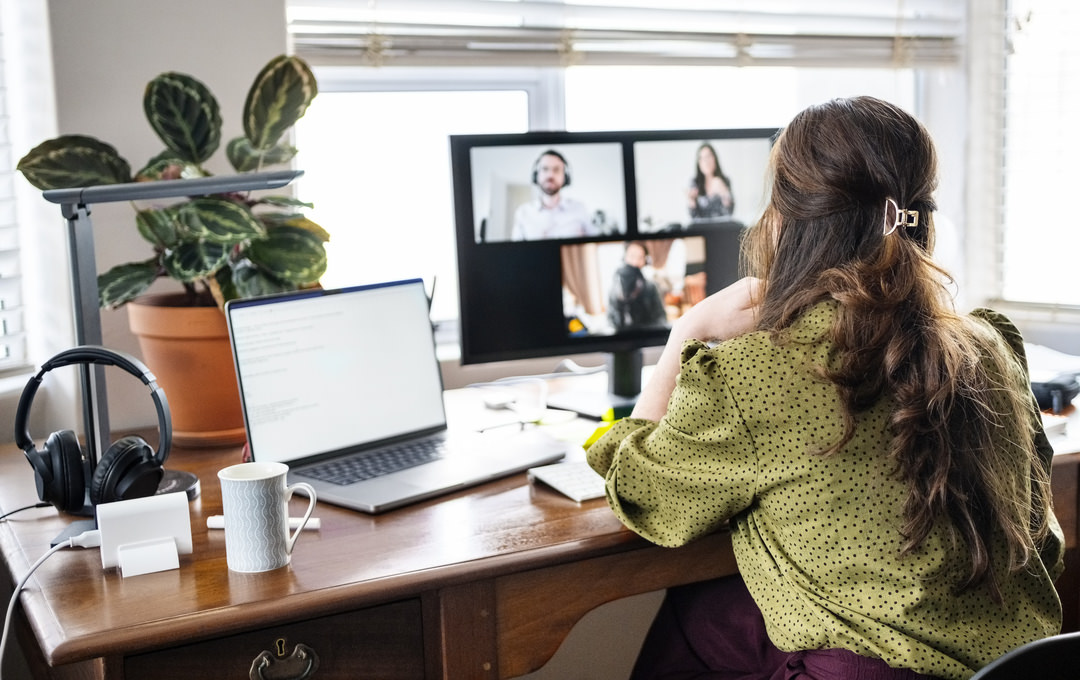
As you plan your update, think about how you actually work. Do you spend hours on video calls? Need room for dual monitors? Wish your paperwork had a permanent home? The answers will help determine which upgrades will make the biggest difference.
A great place to start is by exploring HOM Furniture's Home Office collection to find desks, seating, storage, and accessories designed for every style of workspace.
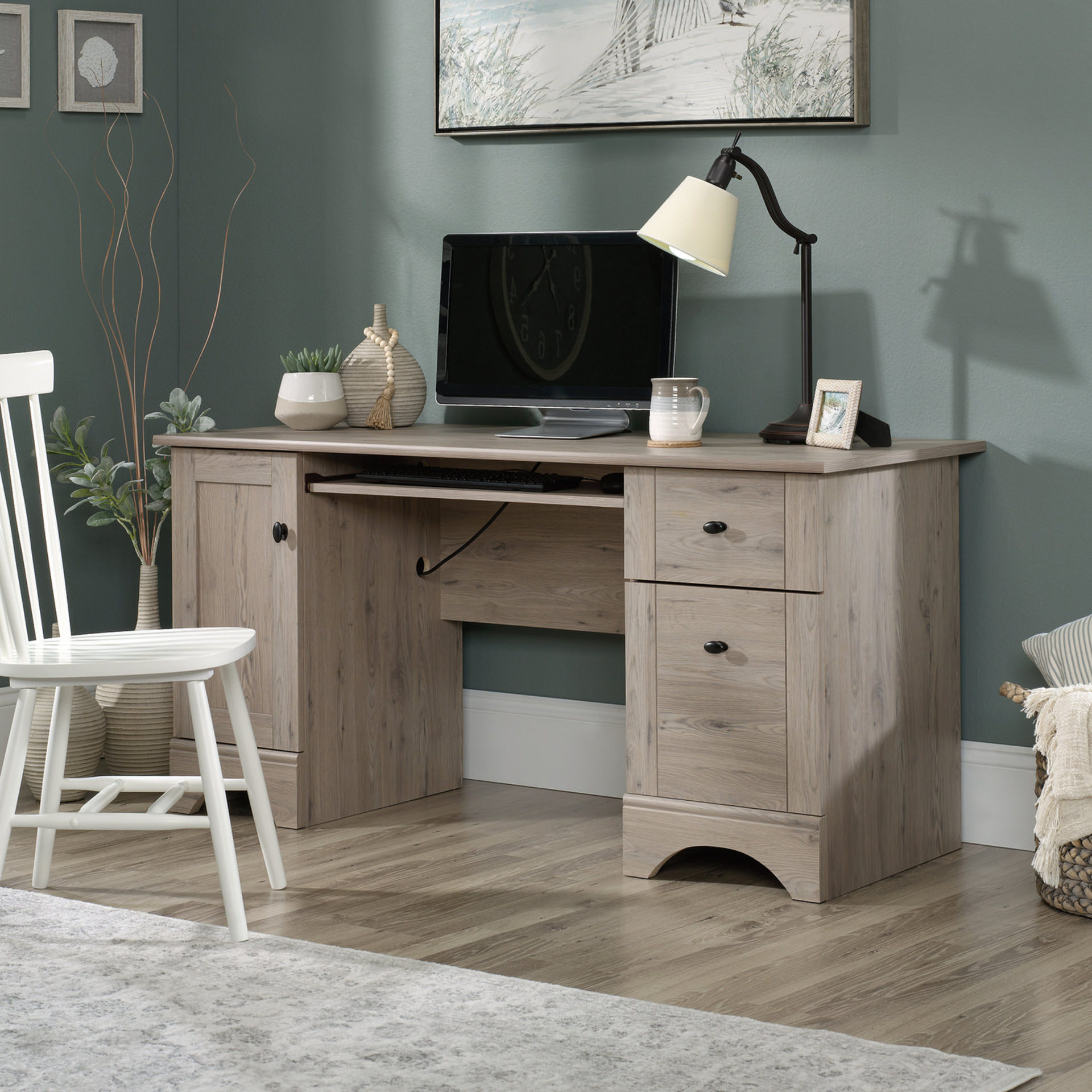
What Is the Best Desk for Working From Home?
The best home office desk is the one that fits both your work style and your available space.
Different desk styles solve different problems. Before choosing one, think about how much surface area you need, whether your office serves multiple purposes, and how often you change positions throughout the day.
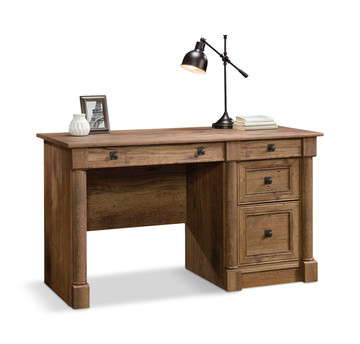
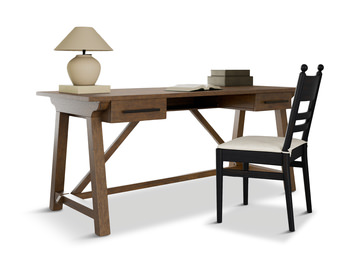
Writing Desk
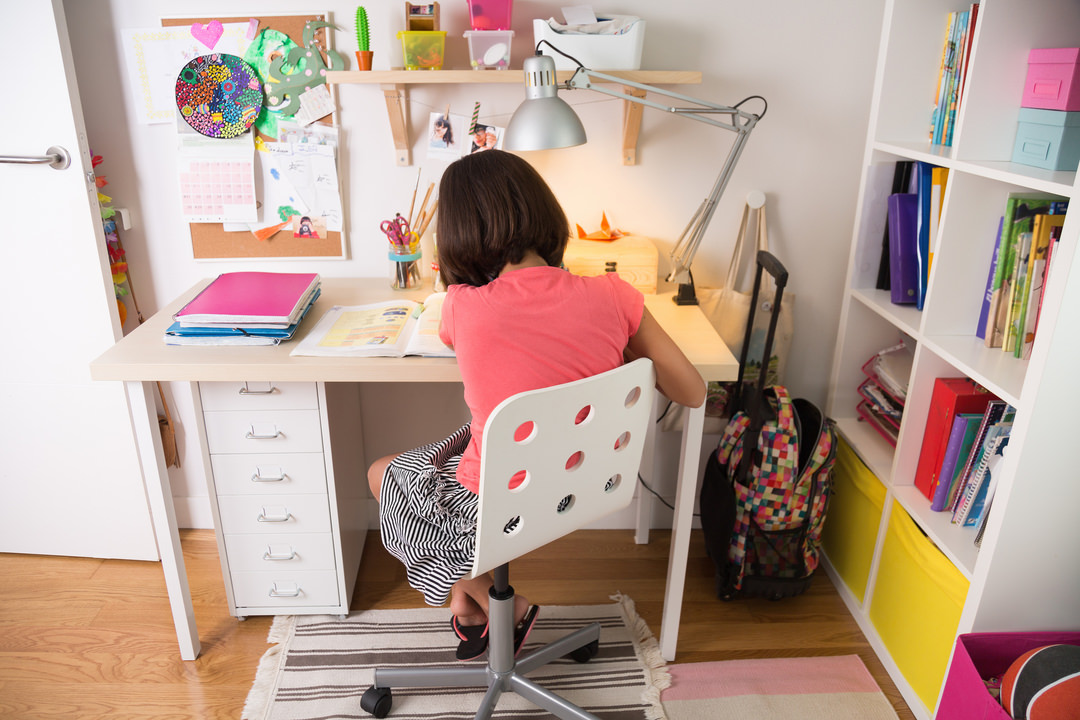
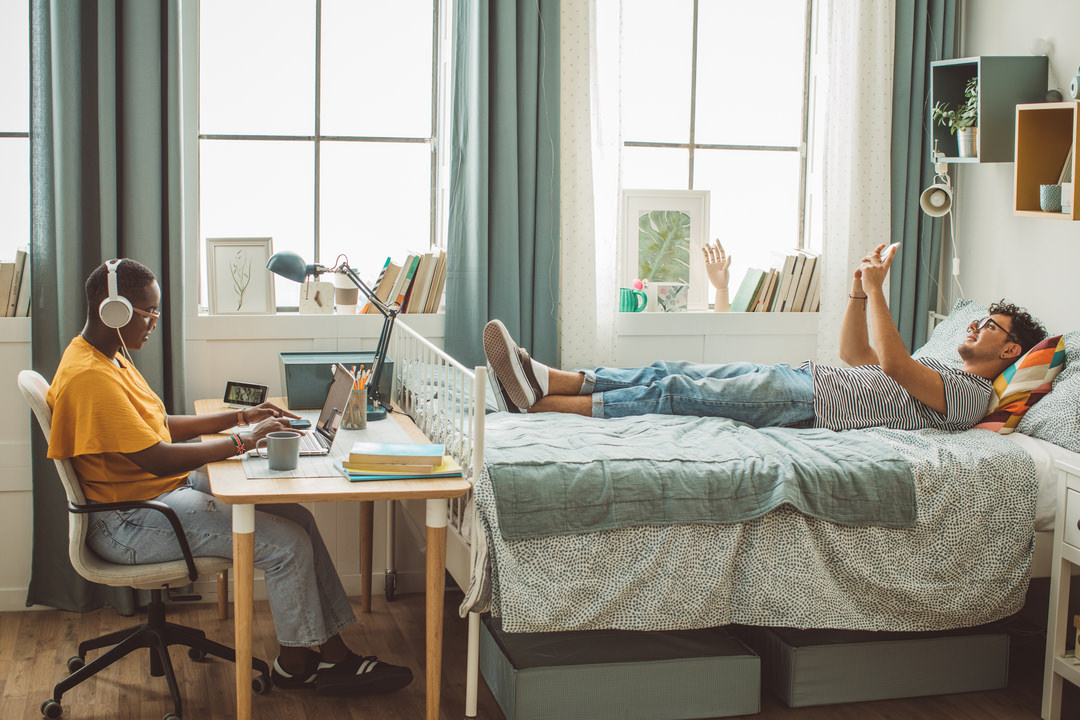
A writing desk is ideal for smaller rooms and minimal work setups. A writing desk is best if you:
- Primarily use a laptop
- Prefer a clean, uncluttered workspace
- Need a desk for a guest room or bedroom office
Its streamlined design keeps the room feeling open while still providing enough workspace for everyday tasks.
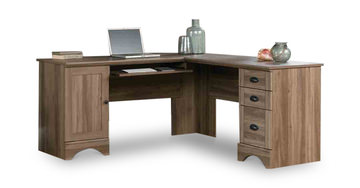
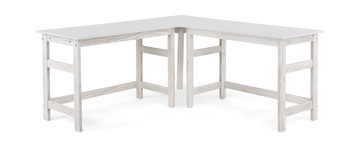
L-Shaped Desk
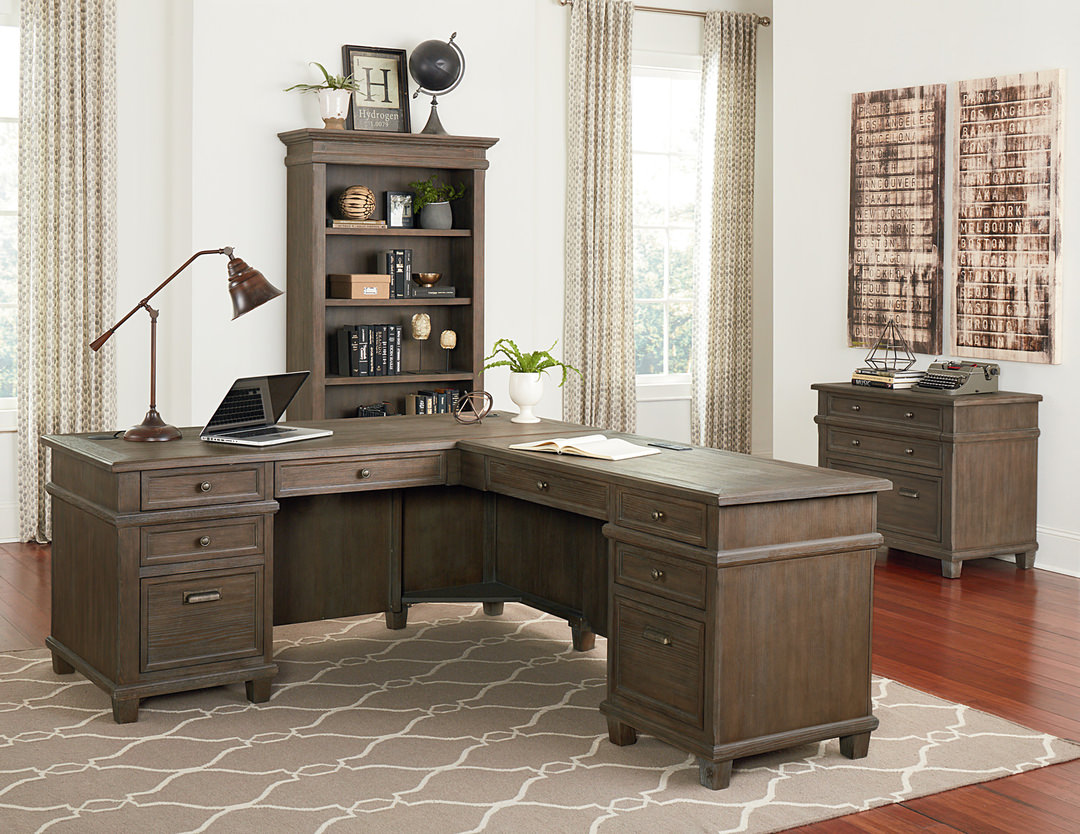
An L-shaped home office desk offers the most usable workspace. This style works well if you:
- Use multiple monitors
- Spread out paperwork
- Frequently multitask
- Want dedicated work zones
The additional surface area makes it easy to separate computer work from writing, planning, or creative projects.
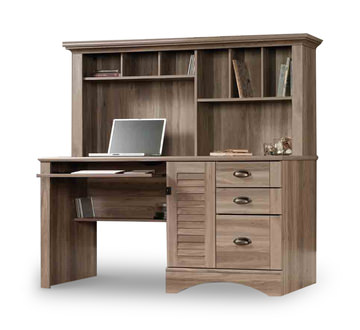
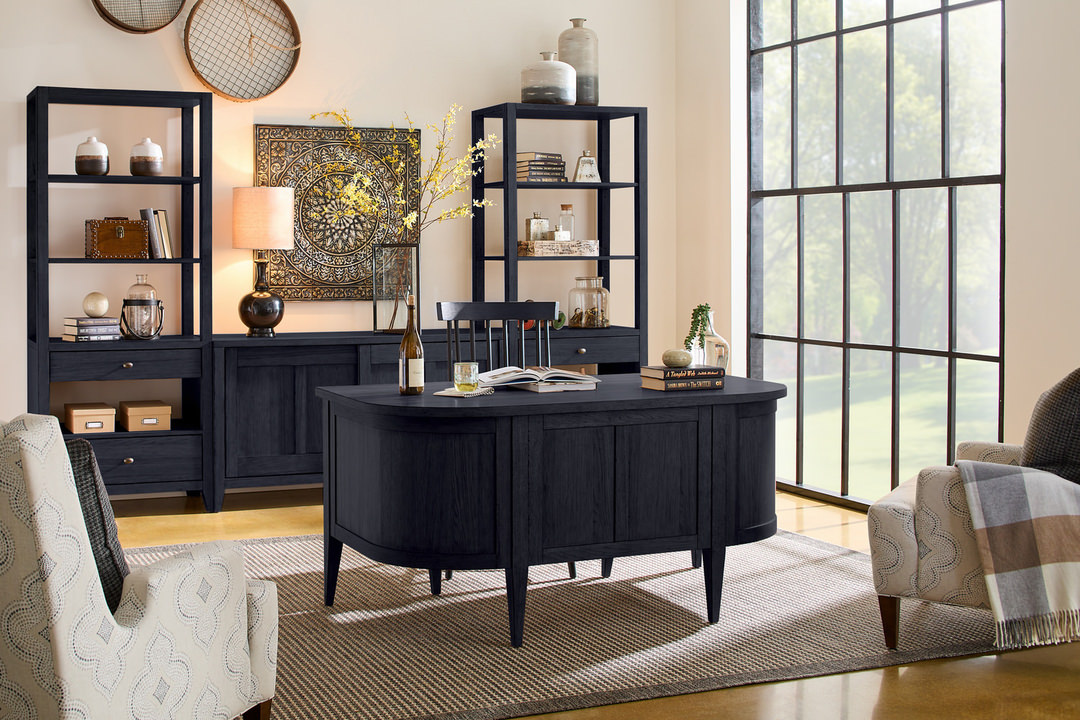
Executive Desk
An executive desk is ideal if you need a spacious, professional workspace with built-in storage. Choose an executive desk if you:
- Work from home full-time
- Need room for multiple monitors or larger equipment
- Want built-in drawers to keep supplies organized
- Prefer a traditional, polished office aesthetic
Executive desks typically offer generous work surfaces and integrated storage, making it easy to keep everyday essentials within reach while maintaining a clean, organized workspace. They work especially well in dedicated home offices where you have the space to create a permanent workstation that feels both functional and refined.
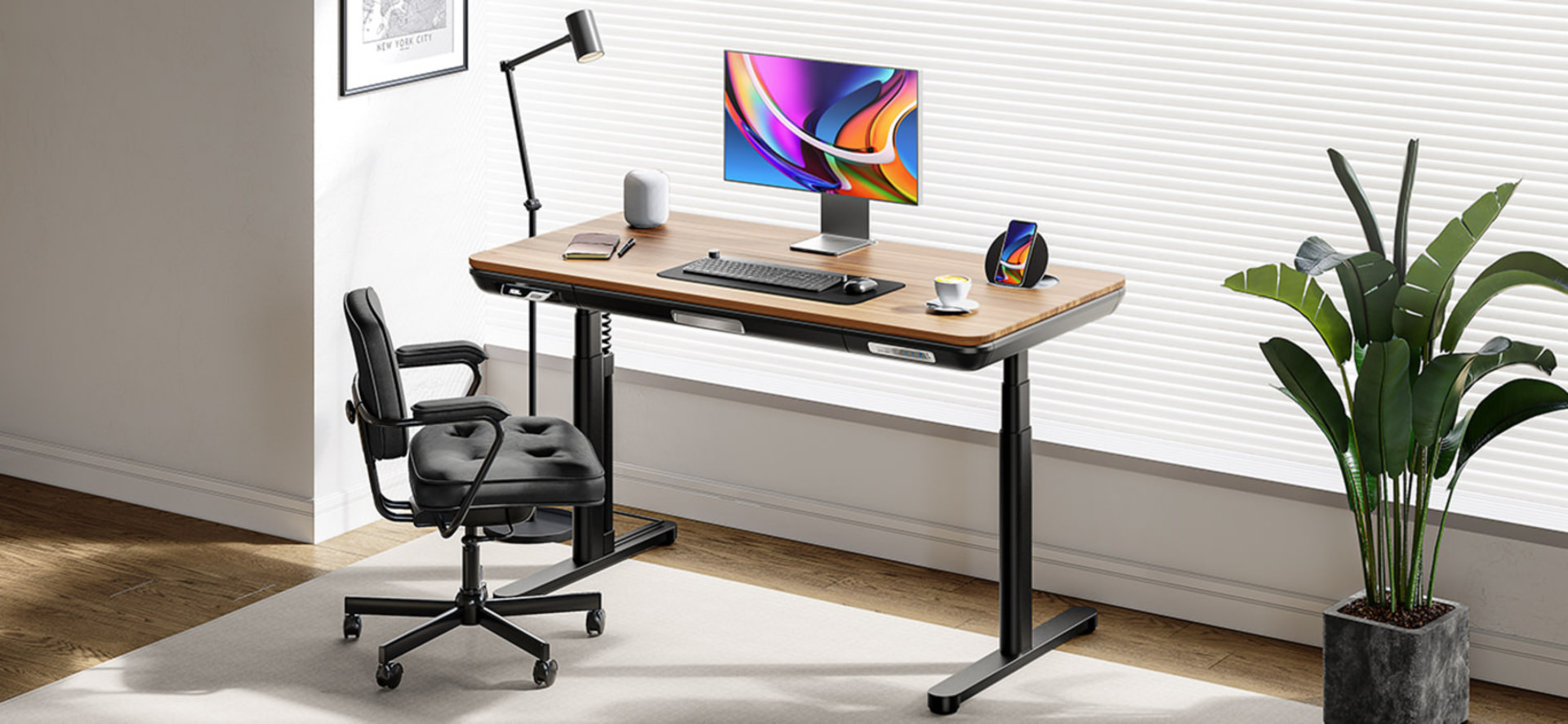
Sit to Stand Desk
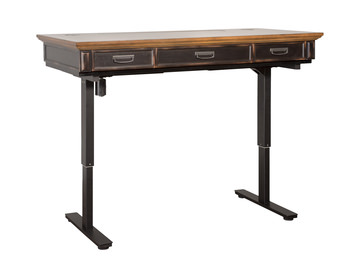
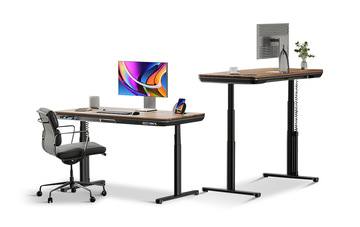
A sit-to-stand desk offers flexibility without taking up additional space in your office area. If you spend long hours sitting, a power lift desk allows you to alternate between sitting and standing throughout the day while keeping your current workspace intact.
How Do I Set Up an Ergonomic Home Office?
An ergonomic home office starts with an office chair that properly supports your body throughout the workday. While your desk matters, your chair has the biggest impact on long-term comfort.
Office Chair Comparison:
| Chair Style | Best For |
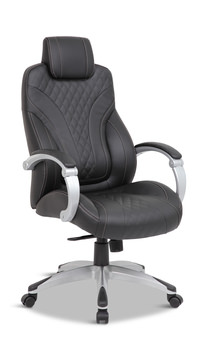
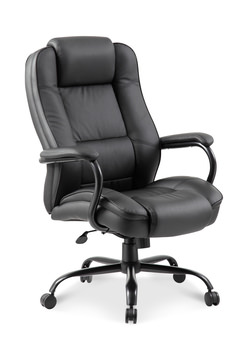
| Executive Chair | Spacious offices, traditional design, premium cushioning, extended sitting |
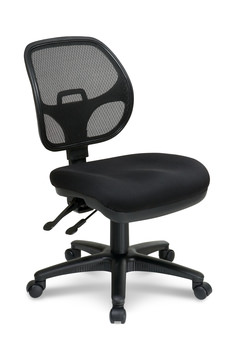
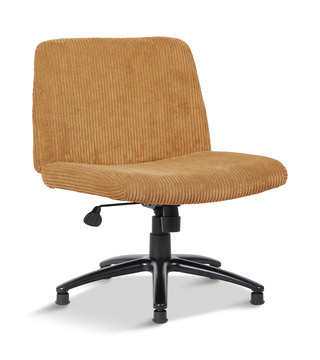
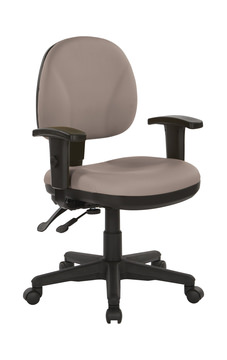
| Task chair | Everyday use, smaller spaces, adjustable comfort, affordability |
| Ergonomic Mesh Office Chair | Long workdays, breathable support, posture improvement, adjustable lumbar support |
An ergonomic office chair helps encourage healthy posture by supporting your back, shoulders, and neck while allowing your feet to rest comfortably on the floor. If you regularly spend six or more hours at your desk, ergonomic features like adjustable lumbar support, seat height, armrests, and tilt controls are well worth the investment.
Home Office Ergonomics Quick Checklist
Use this checklist to create a workspace that's comfortable throughout the day:
- Position your monitor at eye level.
- Keep elbows bent around 90 degrees while typing.
- Place feet flat on the floor or on a footrest.
- Keep wrists straight while using your keyboard and mouse.
- Sit with your lower back fully supported.
- Position your monitor about an arm's length away.
- Stand and stretch every 30–60 minutes.
Even small adjustments like these can help reduce neck strain, back discomfort, and fatigue over time.
How Do I Organize a Small Home Office?
The best small home office combines smart storage with furniture that works harder.
Clutter makes any workspace feel smaller. Choosing the right home office storage helps keep everyday essentials organized while maintaining a clean, productive environment.
Consider adding:
- Lateral File Cabinets: Perfect for organizing important paperwork while providing additional surface space for décor, printers, or office supplies.
- Bookcases: Bookcases maximize vertical storage without taking up much floor space. They're ideal for books, decorative storage baskets, plants, and personal touches that make your office feel inviting.
- Credenzas: A credenza offers concealed storage for office supplies, electronics, and files while creating a polished, furniture-like appearance that blends into living spaces.
In smaller rooms, look for furniture that serves more than one purpose. Pieces with drawers, shelves, or hidden compartments help maximize every square foot.
What Lighting Is Best for a Home Office?
The most effective home office uses layered lighting instead of relying on a single light source.
Good lighting reduces eye strain, improves focus, and creates a more comfortable environment throughout the day.
A balanced workspace includes three types of lighting.
- Overhead Lighting: General lighting provides consistent illumination throughout the room and establishes the overall brightness of your workspace.
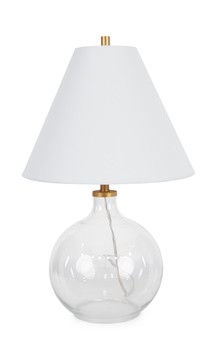
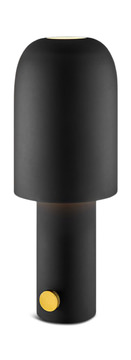
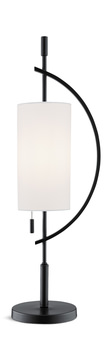
- Task Lighting: A quality desk lamp provides focused light exactly where you need it for reading, writing, or detailed work. Adjustable task lamps are especially helpful during fall and winter when daylight fades earlier.
- Natural Light: Whenever possible, position your desk near a window. Natural light helps reduce eye fatigue while making your workspace feel brighter and more inviting. If glare becomes an issue, position your monitor perpendicular to the window rather than directly in front of it.
Combining all three lighting sources creates a workspace that's functional from morning meetings through late afternoon projects.
Fall is the season of fresh routines, making it the perfect time to finally update the workspace you've been meaning to improve. Whether you're replacing your home office desk, upgrading to an ergonomic office chair, adding smarter home office storage, or improving your lighting, thoughtful updates can help you stay comfortable and productive throughout the busy months ahead.
Explore HOM Furniture's Home Office collection to find desks, seating, storage solutions, and accessories designed to create a workspace that works as hard as you do.




2026
September
August
July



June


May
April


March

February


January


2025








Related Products